Plastic Lined Steel Pipe
Base pipe: ERW welded steel pipe (black or galvanized)
Lining: PE (polyethylene) / PP (polypropylene) / PVC inner lining
Application: Drinking water, fire protection, HVAC, chemical fluid conveying
Connection: Threaded / grooved / flanged end
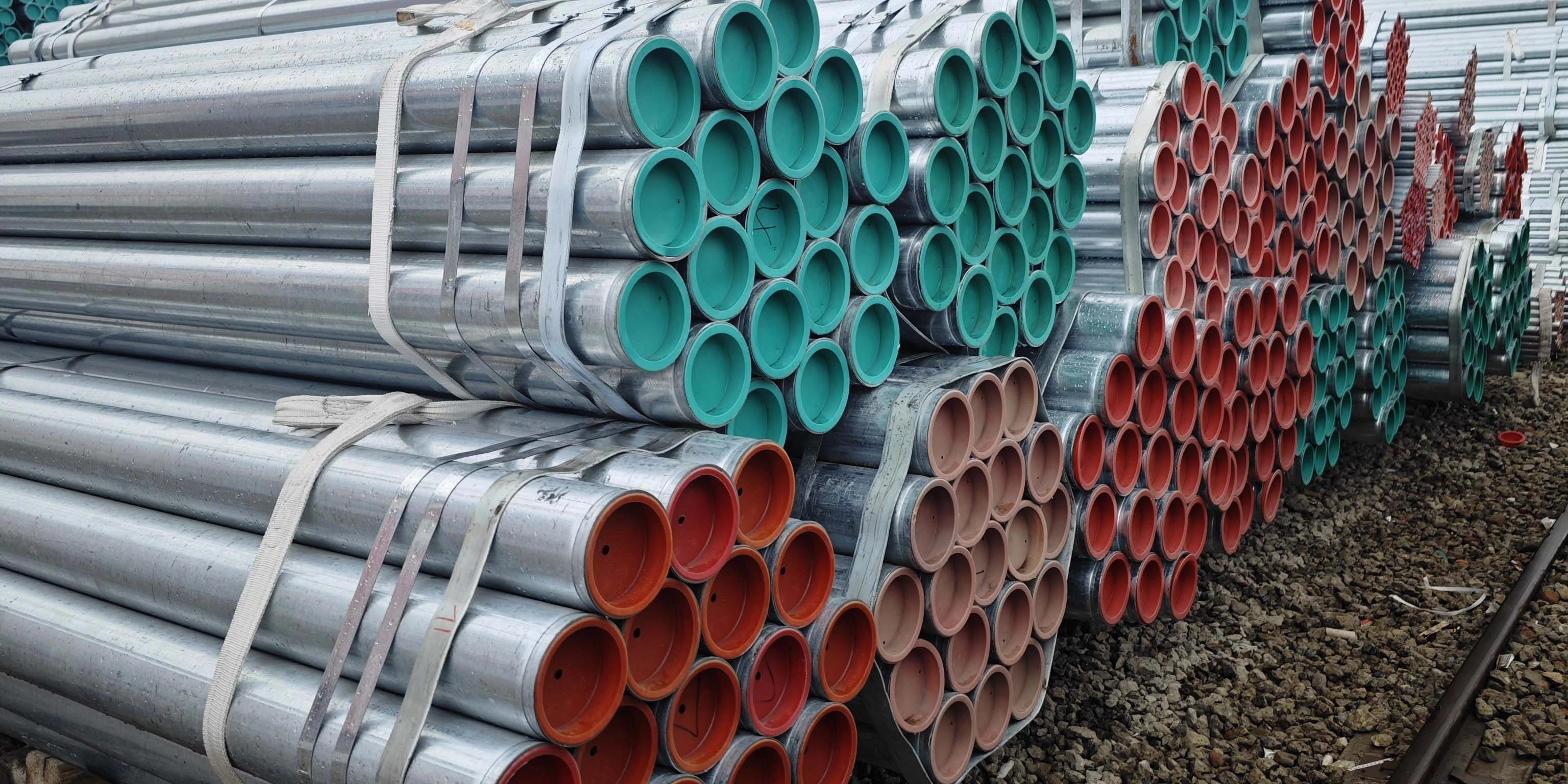
Package: Hexagonal bundle with end caps to protect lining
Standards: CJ/T 136, GB/T 28897
Factory direct supply for municipal water supply, fire protection and building piping projects
Plastic Lined Steel Pipe for Water Supply & Industrial Piping
Plastic lined steel pipe is a pipe built from two materials. On the outside sits an ERW steel shell. Inside it, there is a thermoplastic lining. PE is one lining choice, and PP and PVC are the others. Pressure and structural loads are carried by the steel body. The lining keeps corrosion and scale out of the fluid path. Sizes go from DN15 to DN300 (½"–12"). Lining thickness lands between 1.5 mm and 3.5 mm. How thick it is depends on the pipe diameter. About 200 tons sit in stock at Tianjin Youcheng Technology Co., Ltd. Standard orders ship in 7–10 days.
What Is This Product?
The base pipe comes from Q235B or A53 Gr.B ERW welded steel. It can be black or galvanized. During production, a thermoplastic lining is bonded to the inside wall. Mechanical demands are carried by the steel. The lining stops the fluid from ever touching metal.
This construction is built to CJ/T 136 and GB/T 28897 standards. It is used in drinking water distribution, fire protection systems, HVAC networks, and industrial lines carrying mildly corrosive fluids. End connections — plain, threaded, grooved, or flanged — are available to suit most standard piping configurations.

Product Specifications
| Parameter | Details |
|---|---|
| Base Pipe Material | ERW steel, Q235B / A53 Gr.B |
| Base Pipe Type | Black or galvanized ERW welded steel pipe |
| Size Range | DN15–DN300 (½"–12") |
| Lining Material | PE (polyethylene) / PP (polypropylene) / PVC |
| Lining Thickness | 1.5 mm–3.5 mm (varies by DN size) |
| Standard Length | 6 m fixed length or custom cut |
| End Connection Type | Plain / Threaded / Grooved / Flanged |
| Standards | CJ/T 136, GB/T 28897 |
| Documentation | Mill Test Certificate (MTC) for base pipe |
| Service Applications | Drinking water, fire protection, HVAC, chemical fluids |

Lining Materials and Their Uses
The three lining options serve different service conditions:
PE (Polyethylene): There is nothing toxic in it, and it gives off no smell. Standard sanitary rules allow it to serve drinking water. Chlorinated water will not corrode it. So for municipal supply and building plumbing it usually ends up as the default pick.
PP (Polypropylene): Moderate heat is handled better by this material than by PE. HVAC chilled water loops are one place you will find it. Heating distribution lines are another, and so is hot water supply, wherever the working temperature rises past what PE can take. Check your temperature range first. Then choose.
PVC: Industrial lines that carry mildly corrosive fluids can use it, provided the temperature stays inside the range PVC works in. When heat runs high, pick something else.

Application Scenarios
Municipal and Building Water Supply: The PE lining satisfies the sanitary rules that potable water distribution has to follow. Cold water lines are one job it takes on. Hot water works too. Homes rely on it, and it shows up in commercial buildings and municipal projects as well.
Fire Protection Systems: Grooved ends are one option. Threaded ends are another. Either way, the pipe joins straight onto sprinkler networks and fire main networks. Once the system is under pressure, the steel body keeps its structural strength.
HVAC and Heating Systems: Chilled water loops are a good fit for PP-lined pipe. The same goes for heating distribution, as long as temperatures stay in a moderate range.
Industrial Fluid Lines: A few process lines in a Plastic Lined Steel Pipe move fluids with mild corrosive action. When PP or PVC lines the inside, the fluid comes into contact with less metal. That makes the pipe wall wear away at a slower rate. No high-alloy base material is needed here.

Inspection Before Shipment
Three checks are performed on each pipe before packing:
Lining Adhesion Test: This check shows whether the plastic layer has bonded tightly to the steel wall. In cheaper lined pipe, delamination in service is a failure mode that shows up often. The test screens for it early, back at the factory.
Pinhole Detection: We look over the inside surface for pinholes and other tiny flaws. Say the lining breaks somewhere. Fluid then touches the steel directly, and rust starts from the inside and spreads faster.
Dimensional Inspection: Before shipment, wall thickness is measured against the drawing. Lining thickness gets checked the same way, and it has to sit in the 1.5 mm–3.5 mm range. End dimensions are measured too.
A Mill Test Certificate for the base pipe is included with every order as standard documentation.

Packaging and Delivery of Plastic Lined Steel Pipe
Pipes go into hexagonal packs. Every pipe gets an end cap. That cap keeps the plastic lining safe from harm while the pipes are loaded, moved, and stored. If the liner edge at the joint end gets damaged, the seal may not hold well after installation. So end protection is part of the standard pack format.
Standard lead time is 7–10 days. With approximately 200 tons of stock on hand, common sizes often ship sooner. Export shipments have gone to Kuwait, Russia, Greece, Brazil, Mexico, Kenya, and other markets through established freight partners.

Customization Options
You get to choose the lining material on each order, plus its thickness. The same goes for Plastic Lined Steel Pipe length and the type of end connection. Stock items come in 6 m lengths. Need them shorter or longer? Cut lengths are not a problem. Ends can be threaded, grooved, or flanged to match your drawing. That work is done before the pipes ship. If your project must meet a local standard or needs your own branding, OEM and ODM processing is available.

Global Clients Visit Our Steel Supplier Factory

Frequently Asked Questions
Q: Which lining material should you use for drinking water service?
A: PE lining is what most people go with for drinking water. Nothing toxic is inside it, and it gives off no smell. The hygiene rules that cover drinking water lines are met too. In drinking water work you will almost never see PP or PVC.
Q: What temperature range does each lining support?
A: Cold water service is where PE fits. PP is the usual pick for hot water or HVAC use, since it can take somewhat higher heat. When you place an order, send us your operating temperature so we can confirm the right lining.
Q: What end connections are available?
A: Ends come in threaded, grooved, flanged, or plain. The end processing can be finished at the factory before the goods ship.
Q: What is the reason end caps come in the packaging?
A: Every pipe end carries a plastic lining. That lining chips or cracks easily while a pipe is being moved or handled. A liner edge that gets damaged at the joint can break the seal of the connection. So end caps ship as a standard precaution, not as something optional.
Q: Is a Mill Test Certificate provided?
A: Yes. A Mill Test Certificate for the base pipe is standard with every order. Additional documentation requirements can be discussed at the time of inquiry.
Contact Us
Send your size, quantity, and Plastic Lined Steel Pipe application details to sales@youchengkjsteel.com. We typically respond within one business day.