What is the difference between drill pipe and casing pipe?
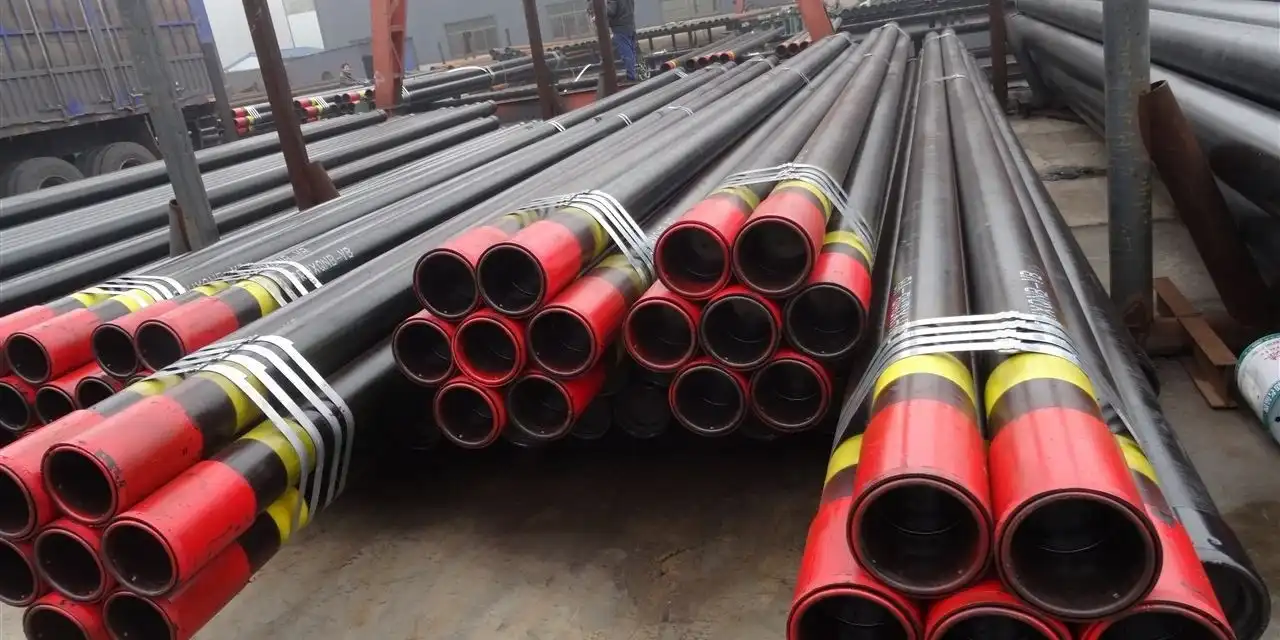
Drill pipe and casing pipe look alike on a pipe rack, but they do completely different jobs downhole. I answer this question almost every week from buyers planning a new well program or a rig upgrade. In short, drill pipe (API 5DP) rotates the bit, carries torque, and pushes drilling fluid to the bottom of the hole. Casing stays in the well after drilling ends, holding the wall open and sealing off pressure zones. This guide compares structure, steel grades, pressure ratings, connections, and standards for both products, so you can match the right pipe to the right job without guessing or over-ordering.
Fast Facts: Drill Pipe vs Casing Pipe at a Glance
Here is a quick way to compare these two items before you talk to a seller.
- The drill pipe (API 5DP) moves and turns while it's being drilled. To move the bit and the drilling fluid down to it, it sends torque and picks up bits along the way. The work piece is taken out of the well, cleaned, inspected, and then used on the next well. Stress life and thread health are just as important as raw strength because of this.
- It is usually glued in place to keep the hole open and separate the pressure zones. The casing pipe stays inside the well. It doesn't use drill pipe (API 5DP), so it sticks to API 5CT or ISO 11960 instead. Its main job is to fight failure and burst loads, not torque.
- The steel types have names that sound the same, but the numbers that follow them mean different things. Grades of drill pipe (API 5DP) such as E75, X95, G105, and S135 show the lowest yield strength in psi. Different numbers are used for API 5CT casing grades like J55, K55, N80, and P110. These numbers are based on how well the grades collapse and burst.
- The connections are used for different things. Joints on rotary shoulder tools that are used to drill pipe (API 5DP) are made to last for thousands of times that they are made and broken. When making a case, threaded joints are used. They are designed to only be used once, after which they are shut down and left alone for as long as the well lasts.
People who want to buy should know these four things before they ask for a quote. Read on to learn why each difference is important in the field.
What Is the Main Function of Drill Pipe and Casing Pipe?
What Is Drill Pipe (API 5DP) Used For?
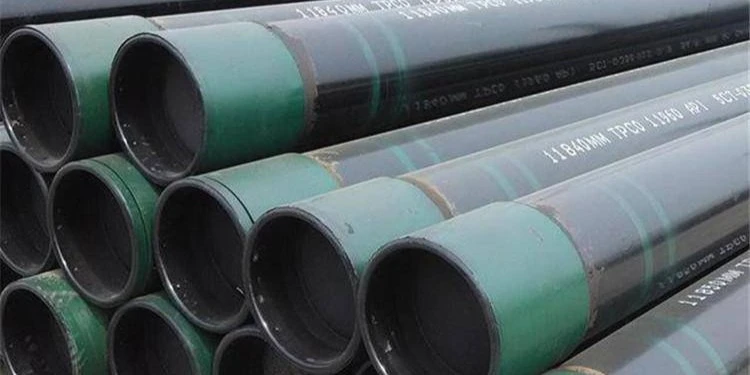
Drill pipe (API 5DP) is a hollow steel tube that connects the rig's top drive or rotary table to the assembly that goes into the ground. It turns the bit, presses down on it, and moves drilling fluid down through its hole before it comes back up through the annulus. The drill string on this pipe can twist, pull, squeeze, and bend loads all at the same time, and it can do this often thousands of meters below the surface. This is not the same as casing, output tubing, or heavy weight drill pipe, even though they all look like round steel tubes. This is drill pipe (API 5DP).
What Is Casing Pipe Used For?
Case is a bigger steel tube that is glued into the wellbore after a part of the hole has been drilled. Its job is to keep unstable formations from moving, keep drilling fluids out of shallow groundwater, and give the operator a clean way to connect finishing tools and production equipment later on. Both API 5CT and ISO 11960 talk about the different types of casings and their sizes, grades, and connections. Since the casing doesn't turn while it's being used, it was more important to keep the pressure inside than to make it resistant to damage.
Drill Pipe vs Casing Pipe: Quick Comparison
| Attribute | Drill Pipe (API 5DP) | Casing Pipe |
|---|---|---|
| Main role | Rotating and moving fluids | Wellbore support and zone separation |
| Governing standard | API Spec 5DP/ISO 11961 | API Spec 5CT/ISO 11960 |
| Movement in well | Moves in and out repeatedly | Installed once, usually fixed |
| Wall design priority | Stress, strain, and wear and tear | Burst, collapse, and axial load |
| Reuse | Usually used again after inspection | Stays in the finished well |
| Connection type | Rotary shoulder threads | API or premium couplings |
How Do Drill Pipe and Casing Pipe Differ in Structure?
Drill Pipe Body and Tool Joints
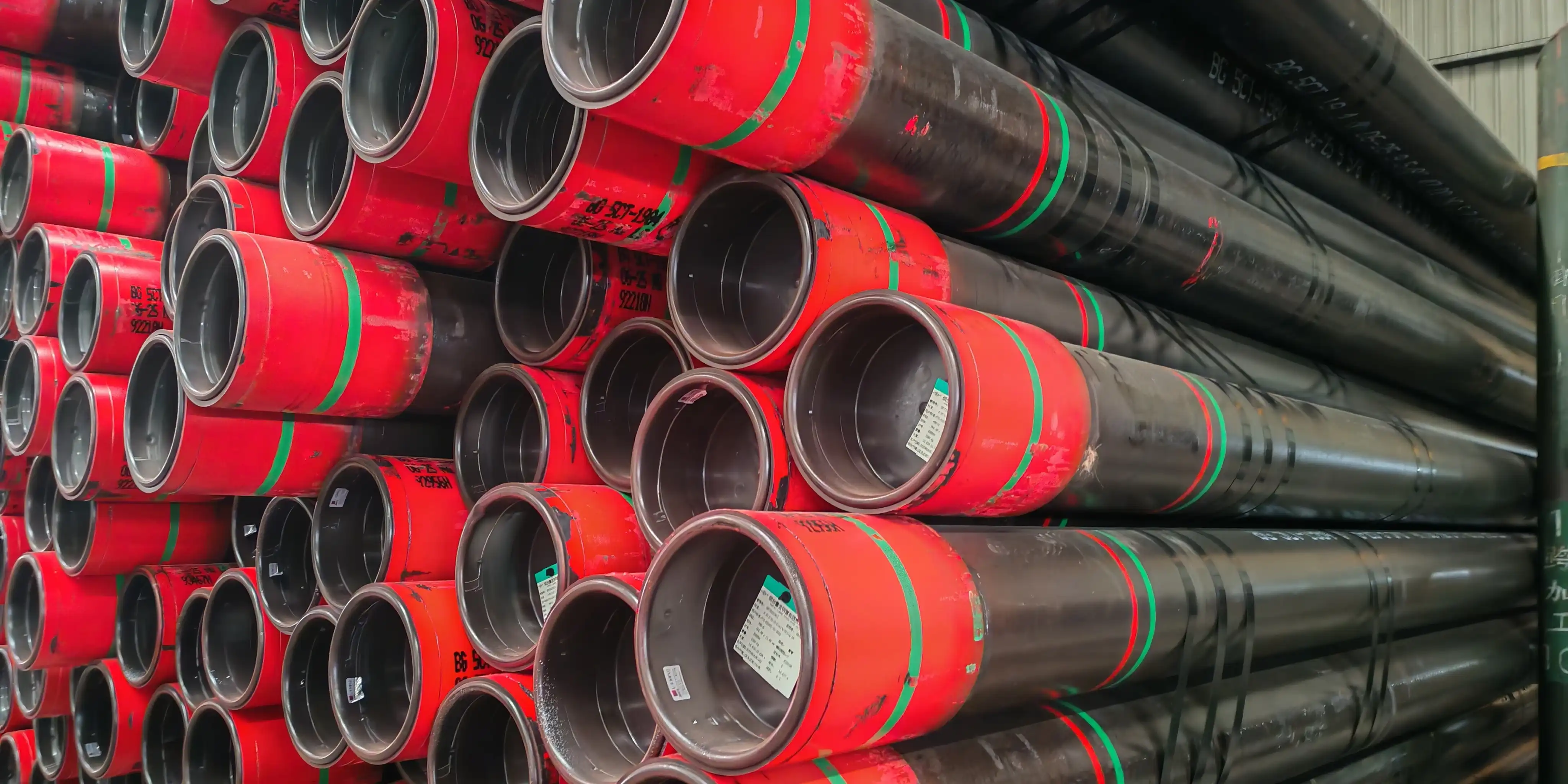
A joint made of drill pipe (API 5DP) has three parts: the tool joints, the upset ends, and the pipe body. Tool joints are bigger on the outside than the pipe body because slips and tongs put a lot of pressure and wear on them. Foam welding is used to connect the tool joint to the pipe body. This makes a transition zone that needs to be heated the right way so that fatigue cracks don't show up too soon. This pipe is made by Youcheng by rolling it in hot metal, then cooling it down and making it stronger. After that, they friction-weld the tool joints and finish-machine both the pipe body and the connection faces.
Casing Body, Couplings, and Threaded Connections
There is a pin end and a box end on each end of a casing joint. There are also joints that come with a different connection that fits on both of the plain ends. The pipe's inside diameter is always smaller than the coupling's outside diameter. This is important to know when figuring out how much space there is between holes in deep ground. Most of the time, casing strings are only put together once and then taken apart again. In other words, how well the seal works under pressure is more important than how fast it cycles through torque.
Why These Structural Differences Matter in the Field
Drill pipe (API 5DP) is made so that the tool joints can be put together and taken apart many times, even thousands of times over the life of the pipe. Case connections are only supposed to work once and then close for good. When they buy, people who are new to tube sources often make the mistake of mixing these two design ideas up. It's not possible for a casing connection to handle the make-up and break-out cycles that are needed for drilling.
What Materials Are Used for Drill Pipe and Casing Pipe?
Drill pipe (API 5DP) knows of four main grades. Each is best for a certain kind of load. Low grades work best for shallow wells with light loads. On the other hand, higher grades can handle the force and stress needed for high-pressure, deep, or directional schemes.
| Grade | Min. Yield Strength (psi) | Min. Tensile Strength (psi) | Typical Use Case |
|---|---|---|---|
| E75 | 75,000 | 100,000 | Deep wells, water well drilling, geothermal |
| X95 | 95,000 | 105,000 | Level wells with average torque needs |
| G105 | 105,000 | 115,000 | General work deep cutting |
| S135 | 135,000 | 145,000 | Heavy-duty, high torque wells |
All four grades are made by Youcheng, which hot rolls, seamless forms, quenches, and tempers steel. Sizes on the outside range from 60.3 mm to 168.3 mm (2-3/8" to 6-5/8"). Lengths fall into Range 2 (9.1 m) and Range 3 (12.2 m).
Casing Steel Grades Under API 5CT
These casing grades—J55, K55, N80, L80, and P110—are based on API 5CT. The choice is based on the amount of corrosive gas in the well, the axial load it will have during running and cementing, and its burst pressure and resistance to collapse. These grades can't be switched for drill pipe (API 5DP) grades, even though the return numbers look the same on paper. The reason for this is that the chemistry and heat treatment are meant to stop different kinds of failure.
Material Traceability and Mill Certificates
We send each heat batch of drill pipe (API 5DP) with an EN 10204 3.1 mill test certificate that shows the heat number, the chemicals used, and the results of the mechanical tests. As per NACE MR0175/ISO 15156, wells that are near H2S must have a hardness of 22 HRC or less. Buyers should be able to track down the heat number of every joint, not just the batch average. This is because a bad well with one out-of-spec joint can fail from stress rust long before the rest of the string does.
How Do Drill Pipe and Casing Pipe Handle Pressure?
Drill Pipe Internal Pressure and Hydraulic Flow
Drill pipe (API 5DP) brings drilling fluid from the top of the hole down through the bit nozzles and the pipe's bore. After that, it brings the cuts back up through the collar. What changes the tool joint bore, internal diameter, mud weight, and pump rate are the pressure drop and flow speed. Erosion can happen when a bore that is worn out or not big enough is put through a lot of water. This could lead to a blowout, which is a hole in the pipe wall made by fluid that moves quickly and roughly.
Casing Burst and Collapse Resistance
There are two kinds of pressure that the casing has to stand up to. Boiling water or solids inside the pipe can cause pressure that can cause it to burst. As formation pressure from the outside moves in, it causes collapse pressure. This usually takes place when a part of the wellbore is drained. When making a casing, it's important to think about the loads that will be put on it when the cement hardens, the axial tension while it's running, and the wear that will happen during drilling or workovers in the future.
Pressure-Related Failure Risks and How to Reduce Them
A drill pipe (API 5DP) will usually break because of washouts, wear cracks near the tool joint, or connection leaks from a broken thread or shoulder. Sometimes casings fail because they break, bend, or have connections that leak when pressure is put on them. It's easy to get rid of both risks: buy pipe with a written design margin, check the threads on every joint, test the pipe for pressure and drift before taking it, and keep track of torque and handling for the whole service life.
Before, unrecorded tool-joint repairs led to two washouts in eight months in a field case I looked at with a drilling contractor in the Middle East who ran six rigs. Based on their own maintenance log, the contractor's non-productive time with the drill string went down by about 30% over the next year after they switched to a supplier that gave them both MTC and NDT records at the same level. If you want to cover every joint, you need a different license. This is often the difference between a job that goes smoothly and one that costs a lot to do.
What Are the Differences in Wall Thickness and Dimensions?
API 5DP Drill Pipe Sizes and Weights
The drill pipe (API 5DP) table is used to figure out the nominal size, outside diameter, wall thickness, and nominal weight per meter. Manufacturers make sure that the dimensions are correct when the things are shipped. Youcheng works with ODs from 60.3 mm to 168.3 mm, which is large enough for most land and sea rigs in Africa, Latin America, and the Middle East.
Casing Dimensions and Weight Classes
A casing's size is shown by its stated weight, wall thickness, and drift width. Drift diameter is the smallest hole that a tool is guarantyd to be able to fit through. People who are buying casings should look at more than just the OD and grade when they compare two prices. They should also check how thick the walls are. Why is this? Because the burst, collapse, and tension design for a well section can make casing weight classes within the same OD change a lot.
Why Wall Thickness Alone Does Not Determine Strength
A bigger wall doesn't always make the joint stronger. We know that grade, heat treatment, connection geometry, ovality, and wear from previous use can change strength in real life. People have compared two quotes for drill pipe (API 5DP) based only on OD and weight, only to find out that one pipe had a poorer tool joint that couldn't handle the power grade of the body. It is not enough to just look at nominal dimensions; you should always ask for certified performance data.
How Do Drill Pipe and Casing Pipe Connect to Each Other?
Drill Pipe Tool Joint Connections
There are different kinds of rotary shoulder connections on drill pipe (API 5DP). Each one is sized to handle a different amount of torque and tension. Some of these are NC38, NC46, NC50, IF, and FH. You must pick a link type that works with the rig's present string and down-hole tools. You could get a failed makeup or a sheared pin if you change connection types in the middle of a string without doing the right crossovers. There are IU, EU, and IEU end shock options from Youcheng. The friction-welded tool joints are made to fit the buyer's choice of link type.
Casing Thread and Coupling Connections
Case-insensitive API brace and long threads are two of the threads. There are also high-end links that can seal wells completely even when the temperature or pressure is high. These connections are judged by how well they close, how much axial load they can handle, and how fast they can be run without breaking. This is because most of the covering strings go in at once.
Connection Inspection Before Every Run
Check these things before you connect the drill pipe (API 5DP) or tubing to the hole:
– Checking the threads against API or maker standards to see if they are worn, galling, or not round, which could prevent a good seal or cause a cross-thread while the rig is being put together.
—Look at the shoulder face on tool joints. One of the most common reasons for a link to leak while drilling is shoulder damage from too much pressure or using the wrong tongs.
– Making sure the thread compound has the right kind of lubricant and enough coverage. When compared to the target value, this has a direct effect on the actual friction factor and, by extension, the actual makeup torque.
– During makeup, keep an eye on the torque and spin and compare them to the manufacturer's suggested range to find a bad link before it goes into the hole.
These checks find most connection problems before they become a lost joint or a string that won't move. This saves a lot of rig time that would have been spent on the check itself.
Where Are Drill Pipe and Casing Pipe Used in the Field?
Where Drill Pipe (API 5DP) Goes to Work
The drill pipe (API 5DP) is used for building gas wells, drilling oil and gas wells, and both directional and horizontal drilling. Different OD sizes, from about 60.3 mm to 127 mm, are also used for drilling water wells and geological research. With Youcheng's cut-to-length and threading services, builders don't have to order full mill lengths to match non-standard rig setups.
Where Casing Goes to Work
The case goes over the conductor, surface, middle, production, and inner strings. For its depth and pressure zone, each string is given a size and grade. It keeps the groundwater close to the surface safe, separates areas of high pressure deep underground, and holds up the tools that will be used to finish the well later.
Three Procurement Scenarios We See Most Often
People can look for drill pipes (API 5DP) in a number of different ways, and the best way to judge them changes based on the way they are looked at.
| Buyer Type | Most Important Needs | First Things to Look at |
|---|---|---|
| OEM/brand | Repeated sizes and connections | Drawings, standards, and batch stability |
| Distributor | Resale paperwork and inventory | Stock status, inspection history, and MTC |
| Contractor | Dependability and service life | Grade, connection, and NDT data |
Diego is in charge of tools for a medium-sized drilling company that has rigs in Kuwait and Oman. The thing that used to bother him the most was having to wait six to eight weeks for an emergency restock during a rig move, he told me. It's much better to have suppliers who keep the right sizes in stock than to just look at price.
How Do API Standards Differ for Drill Pipe and Casing Pipe?
API 5DP and ISO 11961 for Drill Pipe
API Specification 5DP talks about drill pipe (API 5DP) sizes, tolerances, grades, how they should be made, tool joints, and marking. These details can also be found in ISO 11961 for markets that use ISO rules instead of or along with API. People who buy something should be sure they know which version they need for their job because standards can change from one edition to the next.
API 5CT and ISO 11960 for Casing
Case and tube products must meet certain quality standards, sizes, connections, and tests, which are spelled out in API 5CT and ISO 11960. Someone may be able to do drill pipe (API 5DP), but that doesn't mean they can also do case. When it comes to qualification, heat treatment control, and often production tools, the two types of products need different things.
API 7-1, RP 7G-2, and Sour-Service Standards
The product-level guidelines set by drill pipe (API 5DP) are still in place, but this goes along with them. API 7-1 talks about rotary drilling tools and how to design a rotary shoulder connection. API RP 7G-2 tells people how to look at and sort used drill stem parts. This paper should be shown to anyone who wants to buy used pipe. We follow NACE MR0175/ISO 15156 (AMPP, 2024) when it comes to hardness and materials in sour-service wells. Before choosing a grade and coating specification, I always tell buyers to talk to their drilling engineer about H2S exposure.
Which Factors Determine Drill Pipe and Casing Pipe Selection, Inspection, and Sourcing?
Drill Pipe Selection Checklist
There is no way to quickly find the right type of drill pipe (API 5DP) for a well project.
- The drilling expert should include the well's depth, path, and estimated hook load, torque, and overpull numbers in the string design. These numbers tell you the smallest grade and size of link that are safe.
- The amount of mud, the flow rate, and the expected pressure drop across the string all affect the bore size that is chosen and the chance that the pipe will erode over time.
- It was important that the type of connection worked with the current rig and bottom-hole assembly. This was shown by the full name (NC50, IF, FH), not just the pipe size.
- Sour-service exposure, because H2S wells need to keep the hardness at or below 22 HRC and may need an IPC (internal plastic coating) to slow down corrosion.
Casing Selection Checklist
Similar steps are used to pick a casing, but they are based on the burst, collapse, and axial design for the hole section in question, as well as the tools that will be running through the string later on. The grade and link that are used depend on the formation pressure, the temperature at the bottom of the hole, and the amount of rust that is exposed.
New vs Used Drill Pipe (API 5DP)
| Factor | New Drill Pipe (API 5DP) | Used Drill Pipe (API 5DP) |
|---|---|---|
| Initial cost | Higher | Lower |
| Inspection history | Plant handled MTC | Needs full service records |
| Fatigue risk | Lower chance of fatigue | Depends on how it was used before |
| Documentation | Records from factory | Logs for sorting and repairs |
| Best fit | critical wells | Cost-effective projects |
Inspection Steps Before You Accept a Shipment
For drill pipe (API 5DP), a full inspection package should include UT on the whole pipe body, MPI to look for surface cracks near the tool joint, a drift test to make sure there is enough internal clearance, thread gaging, a hydrostatic pressure test, and a hardness check for orders that will be used for a long time. Every batch of goods that Youcheng makes goes through all six checks, and they give out an EN 10204 3.1 license that is tied to the heat number. A third party can also look at the things if the buyer wants them to.
How to Evaluate a Drill Pipe (API 5DP) Supplier
It's better to talk to the factory directly about a few basic things before you place an order than to use a sales brochure. Ask to see an example of a mill certificate that is linked to a real heat number. Also, make sure you have the exact connection plans and torque range for your rig. Finally, don't just settle for "in stock" claims; ask for the supplier's current stock list with dated amounts. Youcheng keeps more than 20000 tons of general types and sizes of drill pipe (API 5DP) in stock. It takes 7–10 days to make a custom order, and buyers can ask questions at any time. When someone wants to buy an API name, they should always check with the factory first, because the license might only cover certain product lines and sizes and not the whole company's catalog.
Supplier Risk and Mitigation
| Risk | Signs to Watch Out For | Ways to Lower the Risk |
|---|---|---|
| Grade mismatch | Grade doesn't match certificate | Check heat number against MTC |
| Used-pipe wear | No repair or inspection history | Require independent NDT |
| Connection mismatch | size given without connection code | Check exact drawings and pressure data |
| Delivery uncertainty | "In stock" without a date | Ask for a dated stock statement |
Our team can help you read an award or figure out which quote is better. When everything is in order the first time, it's a lot easier to get drill pipe (API 5DP).
Conclusion
In the same well, two different types of lines are used to fix different issues. Drill pipe (API 5DP) turns, transfers torque, and moves fluid around while it's working. After that, it's put back out to be checked out and used again. The casing stays in place to keep the well open and the pressure zones apart after it is put in. API 5DP and ISO 11961 are the rules for drill pipe (API 5DP). API 5CT and ISO 11960 are the rules for casing. If you want to buy something, the hard part is making sure that the grade, connection, measurements, and inspection records match your well design. Sometimes, the number on a certificate doesn't tell the whole story.
FAQ
What is the difference between API 5DP drill pipe and casing pipe?
To move drilling fluid and power around inside the well, the drill pipe (API 5DP) turns. This is done by following API 5CT or ISO 11960 instead of API 5DP. The casing is then put in place and usually cemented in place to support the wellbore and keep it from popping or falling apart.
Is API 5DP the same as API 7-1?
Not at all. API 5DP tells drill pipe (API 5DP) products what sizes, grades, and tool joints they need to have. API 7-1 talks about how to make a rotary shoulder connection and rotary drilling tools. The way a drill string is put together may mean that it needs to meet both standards.
What are the common API 5DP drill pipe grades?
The most-used grades are E75, X95, G105, and S135. A range of 75,000 to 135,000 psi is what they can put out. The grade picked is based on how deep the well is, how much torque and stress there is, and how much fatigue can be caused by the planned digging schedule.
How is used API 5DP drill pipe inspected?
To check used pipe, people often look at it visually, test its drift, use a thread gage, inspect it for magnetic particles, test its wall thickness with ultrasound, and hardband it. The scope should match how the pipe has been used in the past and the API RP 7G-2 level of classification.
What documents should I request when buying drill pipe (API 5DP)?
Ask for a mill test certificate under EN 10204 3.1, a heat-number tracking, dimensional and NDT inspection reports, connection sketches, a packing list, and a proof of origin. There is proof that the pipe is the grade and has the inspection history that was promised.
Can casing connections be used on drill pipe, or the other way around?
Not at all. For one run, casing connections are made to keep pressure in for a long time. Tool joints, on the other hand, are made to make and break many times under torque. They may not work together if you use one instead of the other.
Ready to Compare Drill Pipe Specifications With Youcheng
We need to know the depth, grade, link, and number of wells you want to drill or restock a rig. We'll give you a quote that includes mill certificates and an inspection scope that match. Youcheng sells drill pipe (API 5DP) straight from our factory in Tianjin. We have about 20000 tons of stock in grades E75 through S135, with ODs between 60.3 and 168.3 mm. Send our team an email at sales@youchengkjsteel.com to start a technical comparison before you place your next order.
References
1. American Petroleum Institute (2023). API Specification 5DP: Specification for Drill Pipe. https://www.api.org/products-and-services/standards — referenced for grade, dimension, and tool-joint requirements under API 5DP.
2. American Petroleum Institute (2023). API Specification 5CT: Casing and Tubing. https://www.api.org/products-and-services/standards — referenced for casing grade and connection comparison.
3. International Organization for Standardization (2020). ISO 11960: Steel Pipes for Use as Casing or Tubing for Wells. https://www.iso.org/standard/68354.html — referenced for casing specification comparison.
4. Association for Materials Protection and Performance / NACE International (2024). NACE MR0175/ISO 15156 — Materials for Use in H2S-Containing Environments. https://www.ampp.org — referenced for sour-service hardness limits.
5. U.S. Energy Information Administration (2024). Drilling Productivity Report. https://www.eia.gov/petroleum/drilling/ — referenced for drilling activity context affecting drill string demand.
Author: Stella Yang, Manager, Tianjin Youcheng Technology
Stella Yang manages export operations for Youcheng's carbon steel pipe division, working directly with drilling contractors and oilfield service buyers across the Middle East, Latin America, and Africa. She has spent over a decade coordinating mill certification, inspection scheduling, and export documentation for API 5DP drill pipe orders, and regularly advises buyers on matching connection types, steel grades, and inspection scope to specific well conditions.