How to choose plastic lined steel pipe?
If you buy pipe for MEP, plumbing, or fire protection projects, picking the right plastic lined steel pipe decides whether your water system passes inspection or fails a pressure test six months after handover. Plastic lined steel pipe pairs a welded steel shell with a PE, PP, or PVC lining, giving you steel strength plus corrosion resistance in one product. This guide walks through lining selection, sizing, standards, and supplier checks, drawn from shipment records across Southeast Asia, the Middle East, and Latin America. By the end, you'll have a checklist ready to hand to your project engineer.
Here's the short version before we get into detail:
- Match lining to fluid and temperature. PE suits cold potable water lines, PP handles hot water and HVAC loops up to around 90°C, and PVC works for mildly corrosive industrial fluids at moderate temperature. Picking the wrong lining for the service temperature is the single biggest cause of early liner failure on job sites.
- Confirm size range and lining thickness. Reliable plastic lined steel pipe runs DN15 to DN300 (1/2" to 12"), with lining thickness between 1.5mm and 3.5mm depending on diameter. Thinner liners on large-bore pipe often fail compliance spot checks during third-party inspection.
- Check the standards on the mill test certificate. CJ/T 136 and GB/T 28897 are the two Chinese national standards that govern lining adhesion, pinhole resistance, and dimensional tolerance for this pipe category, and most export buyers ask suppliers to test against both before loading.
- Request end processing that matches your fittings. Plain, threaded, grooved, and flanged ends each pair with different connector systems, and ordering the wrong end type adds weeks to a site schedule once pipe arrives.
- Vet the factory, not just the price sheet. Ask for lining adhesion photos, pinhole test videos, and a sample run before committing to a full container, especially if this is your first order with a new supplier.
What Is Plastic Lined Steel Pipe and Where Is It Used?
Construction and Working Principle
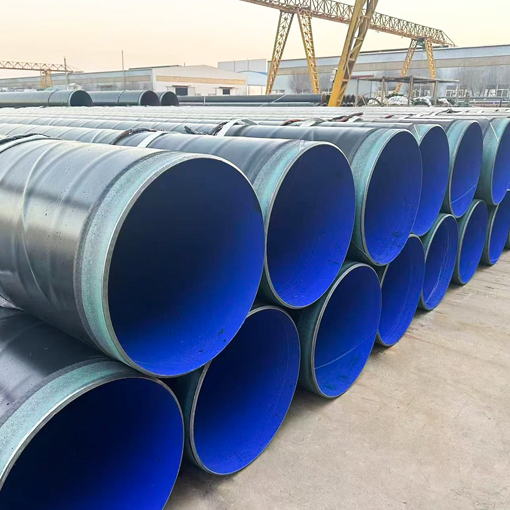
Plastic lined steel pipe is made up of ERW (electric resistance welded) steel tubes that are made from Q235B or A53 Gr.B steel. You can get the tubes in black or hot-dip galvanized. On the inside wall is glued a polymer liner made of PE, PP, or PVC. For fluids or water to touch, this makes a smooth surface that won't rust. When it hits something, the steel shell can handle the force and doesn't break easily. Bugs, rust, and scale can't get into the water stream because of the cover. It costs less than full stainless steel and lasts longer than bare galvanized pipe because it is made of two different materials.
Core Applications on MEP and Fire Protection Projects
Contractors use this kind of pipe in three main ways when they build. PE or PP is used to seal the water lines that bring water to homes so that drinking water doesn't get rusty sounds or tastes. All fire sprinkler networks are made of the same steel shell. The ends of the shell are grooved or threaded to make it easy to put together on-site. PP lining can handle the higher temperatures that these systems reach, so it works well in HVAC systems with hot and cold water loops. MEP workers prefer to work with one family of pipes rather than having to deal with galvanized, copper, and stainless steel pipes separately because all three uses are inside the same building.
Three Real-World Use Cases
From what we see in international sales, the table below shows how three types of buyers choose to buy the same base product in various ways.
| Who bought it | What's most important to them | Most common order |
|---|---|---|
| A high-rise building builder | 6m lengths of DN50–DN150 PE and PP lined pipe with grooved ends. They need it quickly and already have the pressure test reports and grooved fittings that match on site. | Fast delivery, pressure test reports, matching grooved fittings on site |
| Cities | DN100–DN300 PE lined pipes with flanged ends and custom-cut lengths. These pipes must be approved by the local water authority and have accurate large-diameter flanges. | Local water authority approval, large-diameter flange accuracy |
| Building materials distribution company | Mixed lining from DN15 to DN100, ready stock | Full size range in one shipment, hexagonal bundle packaging, repeat pricing |
This is what most people in Kuwait, Brazil, Kenya, and the Philippines want. plastic lined steel pipe is used instead of older galvanized systems in these places for both renovations and new builds.
Which Lining Material Fits Your Project: PE vs PP vs PVC?
Polyethylene (PE) Lining
If the water is cold (room temperature), usually up to 45°C, it is best to use PE lining. Scale doesn't stick to it, filtered water tastes good, and it bends a little while being put in place without breaking. PE lined steel pipe is cheaper than PP pipe, which is why most home and business water pumps use it. GB/T 28897 still says that it meets the standards for clean drinking water.
Polypropylene (PP) Lining
As high as 90 to 95°C, PP lining can handle it better than PE lining. Because of this, it is often used for home heating circuits, HVAC hot water loops, and hot water branches. PP also lasts longer when the temperature changes a lot, like when the pipe heats and cools several times a day because of building systems that go on and off. Business tower engineers often list PP coating by name in the BOQ when they describe lines for condenser water or cold water.
PVC Lining
PVC-lined plastic lined steel pipe offers better chemical resistance than high-temperature resistance, making it suitable for acidic process water and other compatible fluids. It's less expensive and can be used for things like drainage, irrigation returns, or moving light industrial fluids. You shouldn't use PVC to line hot water or fire pumps because it can't handle higher temperatures than PP.
Lining Selection Table
Here it is to help you quickly fit the inner material to the service state:
| Service condition | Recommended lining | Normal temperature range |
|---|---|---|
| Up to 45°C cold water that you can drink | PE | Up to 45°C |
| HVAC and hot water loops | PP | Up to 90–95°C |
| Fire safety (wet system) | PE or PP | Up to 60°C |
| Chemical or process fluid that is mild | PVC | Up to 60°C |
What temperature and type of fluid will be running through the pipe for twenty years, not just on the first day it is used? That's what determines which one to pick.
How Does Fluid Type and Temperature Affect Lining Choice?
Matching Lining to Service Temperature
From what people in the field have told us, temperature mismatch is the main reason more liners fail than any other force. For several years, a PE lined pipe that was put on a hot water HVAC return will become soft, bend, and eventually blister. Before you pick out the material for the lining, make sure you know what the system's highest continuous temperature is and what its highest short-term temperatures might be during the wash or sterilization cycles.
Chemical and Sanitary Considerations
The inside of systems that bring water to people's homes needs to be clean so that chemicals, smells, or tastes don't get into the water. GB/T 28897 has specific rules for pinholes and adhesion so that bacteria don't grow in the spaces between the liner and steel. People often compare the items they buy for projects outside of China to local plumbing rules or sources such as the US NSF/ANSI 61 drinking water component standards.
Temperature Decision Checklist
You should talk to your mechanical engineer about these things before you choose a lining. Find out the highest temperature that the fluid can work at in a short amount of time. A system that flushes hot water, doses chemicals, or cleans itself more often than it should should have these cycles. Check the lowest temperature as well. When fit in cold places, some covers can get harder and more likely to break. Write down the type of fluid, even if it's "just water," because clean wastewater and drinking water have different amounts of chemicals in them.
What Size and Lining Thickness Should You Specify?
Size Range and Common Project Quantities
Sizes of plastic lined steel pipe from one supplier's catalog range from DN15 to DN300, which is about 1/2" to 12". This means that a builder can place an order for both small fire main shafts and big water branches for homes at the same time. From 2023 to 2024, we know that DN50 to DN150 are the most popular sizes bought for private towers. Most municipal projects need DN200 to DN300 for their main distribution lines.
Lining Thickness by Diameter
Liner thickness ranges from 1.5 mm for small pipes to 3.5 mm for large pipes. This is because the wall of a bigger pipe needs to be stronger so that it doesn't bend or hit something while it's being moved. When a third party asks to inspect a DN300 pipe, we often find that the liner is too thin. Because suppliers want to save money, they sometimes use the same thin coat on all sizes. This is what you should ask for: a thickness proof that is tied to each DN size in your order, not just a ship-wide number.
Length, Cutting, and Field Waste
Standard runs are 6 meters long, which is the same length as most site equipment and means that each run doesn't need as many joints. If you cut the pipe to the exact amount you need for a job, you won't have to cut and re-line the ends on site, which saves time and reduces waste. Also, if you order custom lengths ahead of time, you protect the liner from damage that can happen when the pipe is cut with regular tools that aren't made for lined goods.
How Does Plastic Lined Steel Pipe Compare to Galvanized and Stainless Steel Pipe?
Cost and Corrosion Performance Comparison Table
A lot of the time, builders want to know how plastic lined steel pipe stacks up against the two most common choices. The table below shows the trade-offs based on how well fields have done in our export markets in the past.
| Type of pipe | How well it resists corrosion | How much it costs compared to other types | Most common way pipes break |
|---|---|---|---|
| Galvanized steel pipe | Moderate; the coating wears off over time | Lowest | Rust, scaling, and less flow inside |
| Plastic lined steel pipe | High: the liner keeps water away from the steel | Mid-range | Rough handling hurts the liner more than rust |
| Stainless steel pipe | Costliest, with pitting that shows up in high-chloride water | Highest | Stainless steel pipe that doesn't react with most types of water |
When Stainless Steel Still Wins
Stainless steel is still a good choice for pipes that will be seen from the outside, high-pressure steam lines, and projects that need a wetted surface made of only metal for safety or style reasons. Plastic lined steel pipe typically offers the same service life at a lower cost to install when rust protection is more important than surface finish for buried or hidden lines.
Case Data: Kenya Residential Tower Retrofit
An MEP contractor in Nairobi, Kenya, replaced an old steel lift system that went across an 18-story mixed-use tower in 2023. The DN50–DN150 galvanized pipe was swapped out for steel pipe lined with PE and PP that was bought from Youcheng. The contractor's facilities team said that there were 92% fewer calls for rust repairs in the first year after the system was put in place than in the last year of service for the old system. The builder looked at the two bids and discovered that the material cost about $41,000 less than a stainless steel choice for the same job.
What End Connections Work Best for Your Site Conditions?
Threaded, Grooved, Flanged, and Plain Ends
Plastic lined steel pipe can have ends that are smooth, threaded, grooved, or flanged, depending on the connection system you chose for your project. For small DN sizes and simple water branches for homes, threaded tips work well. Welders don't have to get close to a polymer liner when the sides are grooved, so they can use mechanical connections instead. This makes the work go faster. Bolted parts in city mains that are bigger than DN sizes and need to be able to handle changing pressures over and over again need flanged ends.
Matching Ends to Existing Fittings
Before you place an order, compare the parts your team already has to the hole sizes or flange drilling patterns. Installation delays often happen because the pipe ends being processed don't match up with the fittings on site. That's because cutting a liner again on-site could hurt it or leave a steel edge that can get wet. Before production starts, send the fitting manufacturer's spec sheet to the pipe provider. This will solve the problem for good.
Protecting Liner Edges During Grooving
When you groove a pipe that is lined, the edge of the liner is under a lot of forces. Lines that aren't very good can have the liner crack during this step without being noticeable. Find out from your source if they have end caps that are put on at the factory to protect the liner while it is being shipped and a way to groove the liner so that it stays together while it is being rolled. People who buy things often want hexagonal bundles with end caps on every piece because they've had to deal with broken ends on the job site.
Which Standards and Certifications Should You Verify Before Ordering?
CJ/T 136 and GB/T 28897 Explained
The two Chinese national standards most relevant to plastic lined steel pipe are CJ/T 136 and GB/T 28897. The technical standards for steel pipe with a plastic coating that is used in building drainage and water supply systems are set out in CJ/T 136. GB/T 28897, on the other hand, has more specific rules for plastic lined and coated steel pipe. These include requirements for pinhole resistance, lining adhesion strength, and dimensional tolerance. If someone is sending goods to a country with its own plumbing code, they should ask the supplier if their goods have ever been compared to local options, even if full local certification isn't in place yet.
Local Water and Fire Codes
The rules that most countries use for fire safety are similar to NFPA 13 in the US. This code says how fire systems should be built and what parts of them should be approved. The WHO's water quality rules tell us what kinds of things are safe to touch with potable water. This is often used to check drinking water parts. To make sure the inspection goes well after the installation, make sure you know the local code that applies to the job before you sign off on the pipe specifications.
Required Document Package
Ask your provider for all the paperwork before the package leaves the plant. Ask for the base pipe Mill Test Certificate (MTC). This will prove the steel's grade and chemical make-up. Find out what tests were done on the production batch that you ordered to see how well the pinholes and lining stuck together. For every DN size that is shipped, you should ask for paperwork that shows the wall thickness, lining thickness, and length tolerance. These four pieces of paper are enough proof for your project engineer to sign off on material acceptance before the pipe even gets to the job site.
How Do You Spot Low-Quality Plastic Lined Pipe Before It Reaches Site?
Delamination and Pinhole Risks
Delamination is the process by which the plastic layer comes away from the steel wall. It often shows up as a bulge or blockage a few weeks or months after the water starts to flow through the system. Pinholes are very small holes in the liner that let water get to the steel. Rust can form on the inside, where it can't be seen until there is a leak. Both flaws are caused by bad control of the bonding process during production. It's more important to test for adhesion and pinholes at the plant than to just look at it when it's delivered.
Inspection Checklist Before Container Loading
Talk about this list with your supplier or someone else before you seal the container. Make sure that the thickness of the lining measurements are the same as what was agreed upon for each DN size. If the layers are too thin and don't meet the requirements, they might pass a quick eye check but not a good caliper measurement. You can look at records of the pinhole test or ask to see a live video of the spark test being done on a sample batch from the current run of production. Check that each piece has an end cap and that the hexagonal bundle packaging hasn't moved from being handled before. For every size you order, ask for pictures of the inside of at least one cut example.
Batch Consistency Issues
Some buyers who have purchased plastic lined steel pipe from unreliable suppliers report variations in lining color and thickness between batches within the same order. This makes buyers wonder how well the production line checks the quality of the goods. Not as much of a risk if you ask for a single batch production run for your whole order instead of a mix of stock that was left over. This way, you only need to keep one set of test records for the whole shipment.
How Should You Evaluate a Plastic Lined Steel Pipe Manufacturer?
Factory Capability and Certifications
Look at more than just the price quote. Check out what the factory knows how to do. When it comes to quality, a company that runs its own ERW welding line, lining application process, and testing tools is better off than one that hires someone else to do any of these things. A company with ISO 9001 certification has a written system for managing quality. You shouldn't believe what they say, though; you should ask for the certificate number and check it for yourself.
Sample Orders and OEM Support
If a business is willing to give you a small sample order before you commit to a full container, that means they believe in their product and value the relationship they are building with a new customer. Check with the seller to see if they can do OEM or ODM work. This includes custom printing, packaging, and installation directions in more than one language. If they can, don't be afraid to place a small order because it's just for your project.
Youcheng Manufacturing Snapshot
There are steel pipes made and sent out of Tianjin Youcheng Technology since 2014. They have production lines in Tianjin, China, for ERW welding, applying linings, smoothing, cutting, and tests for hydraulics. The plant always has about 20000 tons of plastic lined steel pipe on hand. This lets them get things done faster for regular customers and in 7–10 days for other orders. Russia, Greece, Brazil, Mexico, Kenya, and Kuwait have all been shipped to. Before it was loaded, each order came with checks for a base pipe MTC plus lining adhesive, pinholes, and measurements. You can get OEM and private-label packaging if you want to start your own brand in a local market.
What Does a Real Project Rollout Look Like?
Case Study: Mombasa Mixed-Use Development
In 2023, an outside company building a mixed-use building in Mombasa needed about 14,000 meters of DN50–DN200 pipe for pipe systems for fire sprinklers, HVAC, and home water systems. On the project team's list of things to buy were zinc pipes for water, black steel pipes for fire, and copper pipes for HVAC. They later changed their minds, though, and now they only need to order one shipment of plastic lined steel pipe, which will be divided up according to the type of lining. The number of active vendor accounts dropped from three to one after the contractor switched to a single supplier, as shown in the procurement log that was shared during the order review. This also cut the total delivery time by two weeks compared to the three-supplier plan that was first made.
Lessons for Future Buyers
I didn't learn anything important about the pipe from this project. I learned how to put things together. The team first ordered a 500-meter sample batch and checked it in person for holes and pressure. They wouldn't give out the full purchase order until they were sure that the mill certificate matched the thickness of the lining. The sample step that took two weeks took more time at the beginning, but it kept the project from being much further behind schedule if there was a problem with the quality after all 14,000 meters had been shipped.
Conclusion
Before you sign the order for plastic lined steel pipe, make sure that the lining material is right for the fluid temperature and that the size and thickness match the DN you need. You should also check standards such as CJ/T 136 and GB/T 28897. When you process and pack the liner at the right end, it stays safe from the factory floor to your job site. Steel makes things strong. Ask for the full document package and run a sample order before agreeing to a full container. This will help you make sure that the batch is steady. You will waste a lot of time if you fail the inspection or switch pipes in the middle of a project. But these steps will save you a lot of time in the long run.
FAQ
What is plastic lined steel pipe used for?
Fire sprinkler systems, hot and cold water loops in home and business HVAC systems, and water lines that bring in drinking water all use plastic lined steel pipe that have been coated with plastic. The steel shell can stand up to pressure and mechanical loads, and the PE, PP, or PVC covering keeps the water inside clean and free of rust.
What's the difference between PE, PP, and PVC pipe?
Up to about 45°C, the PE lining can handle cold potable water. Up to 90–95°C, the PP lining can handle hot water and HVAC service. At room temperature, the PVC lining can handle mildly corrosive industrial fluids. Choose the wrong lining for the temperature of the fluid most of the time when it fails early.
What size range does plastic lined steel pipe have available?
These sizes are standard: DN15 to DN300, which is 1/2 inch to 12 inches. The lining's width ranges from 1.5 mm to 3.5 mm, depending on the diameter that is chosen. City mains need DN200 to DN300, but most home projects only need DN50 to DN150.
How do I know if the lining quality is good before it ships?
Ask for test results on how well the lining sticks, clips of pinhole tests from the real production batch, and a picture of a cut sample that shows how it looks from the side. If you only look at something, these three checks would miss flaws like delamination and thin spots.
What specifications should plastic lined steel pipe meet?
The two most important Chinese rules for this kind of pipe are CJ/T 136 and GB/T 28897. They talk about how well the lining sticks, how well it stops holes, and how well the sizes can be changed. Check the local fire and plumbing codes as well for projects outside of China. Each country has its own rules about what is okay.
Can stainless steel be replaced with plastic lined steel pipe?
Yes, plastic lined steel pipe offers the same level of corrosion protection at a lower fixed cost in many situations where pipes need to be buried or hidden. Stainless steel is still the better choice for runs that are meant to look nice or for high-pressure steam service that needs a surface made of metal that can get wet.
Start Your Plastic Lined Steel Pipe Order With Youcheng
It costs a lot more than the pipe itself to get the wrong lining material or a batch with thin spots to the job site. Youcheng has approximately 20000 tons of plastic lined steel pipe in stock, can ship standard orders in 7–10 days, and allows you to order samples before you buy a whole container. Want to work with a dependable company that makes plastic lined steel pipe for a new project or as an OEM partner for your own brand? Send us an email at sales@youchengkjsteel.com with the DN sizes and lining options you want, and we'll get back to you same business day.
References
1. National Fire Protection Association, NFPA 13 Standard for the Installation of Sprinkler Systems (2022). Referenced for fire protection piping code context. https://www.nfpa.org/codes-and-standards/nfpa-13-standard-development/13
2. International Organization for Standardization, ISO 9001:2015 Quality Management Systems — Requirements. Referenced for manufacturer quality system evaluation. https://www.iso.org/standard/62085.html
3. World Health Organization, Guidelines for Drinking-water Quality, Fourth Edition (2022 update). Referenced for potable water material safety context. https://www.who.int/publications/i/item/9789241549950
About the Author
Stella Yang is a Manager at Tianjin Youcheng Technology, where she works directly with MEP contractors, fire protection subcontractors, and building material distributors across Southeast Asia, the Middle East, and Latin America on steel pipe specification and export orders. Her work covers standards compliance, factory inspection coordination, and OEM program setup for overseas buyers. She has supported pipe shipments to markets including Kuwait, Brazil, Mexico, and Kenya over the past several years.
you may like
.webp)
.webp)