How to cut stainless steel pipe
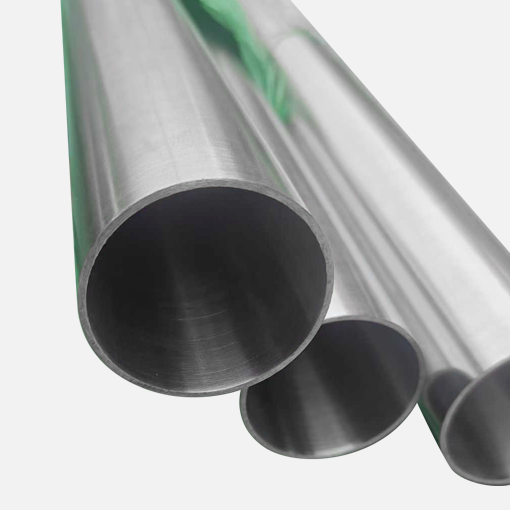
Cutting 201 stainless steel pipe the right way protects your tolerances, your finish, and your delivery schedule. This guide covers the saw types, speed settings, marking methods, and inspection steps that keep decorative and structural runs on spec. If you fabricate railings, furniture frames, or architectural trim, the method you pick affects rework rates, scrap costs, and whether your client accepts the batch on the first inspection. I will walk through the same checklist our technical team uses when we support cutting and finishing requests from buyers across Southeast Asia, the Middle East, and Africa.
Quick answer: The best cutting method for 201 stainless steel pipe depends on wall thickness, diameter, tolerance, order volume, and the end condition you need. Carbide cold saws and band saws give the most repeatable results for production runs. Angle grinders work for field repairs and small jobs, but they need more cleanup. Laser cutting suits thin-wall decorative tube where kerf width and heat input must stay low.
Here is what matters most before you pick a blade or a machine:
- 201 stainless steel pipe has higher manganese content and lower nickel than 304, which makes it work-harden faster under a dull blade or slow feed rate. Dull tooling raises burr size and edge tearing within the first 50 to 100 cuts.
- Wall thickness under 1.0mm needs low-heat cutting and firm support, or the tube will oval out before the blade finishes the pass.
- Every cut batch should carry a Mill Test Certificate under EN 10204 3.1 so the buyer can confirm nickel and manganese percentages match the order, not a mixed 201/304 lot.
- Surface finish grade (2B, BA, No.1, polished, or mirror) determines how much post-cut grinding and buffing the piece can tolerate without losing its look.
These four points set the frame for every section below. Now let's break down the methods, the setup checks, and the inspection steps one at a time.
What Is 201 Stainless Steel Pipe and Why Cutting Method Matters
201 stainless steel pipe is an austenitic iron‑based alloy with chromium, manganese and nitrogen as its main alloying elements, plus a small amount of nickel. It's also called 12Cr17Mn6Ni5N or UNS S20100. Chrome makes up about 16% to 18% of it, manganese about 5.5% to 7.5%, and nickel about 3.5% to 5.5%. Since 201 has a lot less nickel than 304, which usually has between 8% and 10.5%, it costs less than grades with more nickel. But there's a different way to cut it.
Chemistry and Mechanical Properties That Affect Cutting
The metal changes when it's run over a blade because it has less nickel in it. When cut with too much feed pressure or a worn tooth edge, 201 stainless steel pipe can harden faster than 304 stainless steel pipe. ASTM A554 and A312 say that the lowest yield strength is around 260 MPa and the highest tensile strength is over 515 MPa. The pipe is hard to bend once it's in place, as shown by these numbers. They also show that it doesn't cut slowly or dullly, which would make it hotter and cause burrs.
Common Forms and Surface Finishes You Will Cut
People buy 201 stainless steel pipe with walls that are between 0.3 mm and 20 mm thick and outside sizes that are between 6 mm and 1200 mm. They can order the pipe in any length, a set length of 6 meters, or a size that is cut just for them. You can choose a surface that is 2B, BA, No.1, glossy, or mirror. When on a blade, each finish does something different. If you put a very smooth tube on a saw table that isn't protected, it will get scratched. A 2B mill finish surface can be worked on in more ways before it gets marks.
Real Case: Cutting Errors on a Kenya Railing Project
For the 2024 hotel lobby railing package, a medium-sized architecture firm in Nairobi bought 4.8 tons of 201 stainless steel pipe with a mirror finish and a 38 mm outside diameter and 1.2 mm wall thickness. 14% of the pieces from the first batch that were cut with angle grinders had to be thrown away because the ends were scratched and the pieces were not round. In order to cut the new order, a carbide cold saw with a padded vise and a slower feed rate was used. This cut the failure rate to less than 3%. The project manager told our export team afterward, "The second batch looked like one continuous piece of pipe, not twenty different cuts." That one change in the tools saved sixty hours of work that would have been needed to grind the ends and do the work all over again.
Which Cutting Methods Work Best for 201 Stainless Steel Pipe
There are five useful tools: an angle grinder, a cold saw, a band saw, and a grit saw. Each one is the best for a different mix of cost, number, and accuracy.
Cold Saw Cutting for High Accuracy
For smooth, even cuts, a carbide cold saw is the best tool for cutting 201 stainless steel pipe in a business setting. A lot of square ends come in a very small range of lengths that don't change the shape of the blades. Do not let the feed pressure get too high. If you press too hard, the heat builds up and the cut face gets harder. This makes the next blade dull more quickly than usual.
Band Saw, Abrasive Saw, Laser, and Plasma Options
Based on the type of wall and the size of the batch, each store needs its own set of tools. This is how the big choices stack up:
| Method | Best use | Main advantages | Main limitations |
|---|---|---|---|
| Carbide cold saw | High-volume production | Accurate, clean, repeatable | Higher equipment cost |
| Band saw | Medium-volume or large sections | Flexible, lower running cost | Slower; blade tracking needs attention |
| Abrasive cut-off saw | General workshop work | Low starting cost | More heat, burrs, discoloration |
| Laser cutting | Thin-wall precision work | Narrow kerf, good automation fit | Equipment cost, parameter sensitivity |
| Plasma cutting | Thicker or larger sections | Fast, handles heavy wall | Wider heat-affected zone |
| Angle grinder | Field repair, small jobs | Portable, low cost | Lower accuracy, more burrs |
Selecting a Method by Pipe Type
Round 201 stainless steel pipe can be cut with a laser, a band saw, or a cold saw. For cutting tubes that are square or rectangular, you need a band saw or cold saw with four supports to keep the wall from falling. We need to cut the ribbon with low heat so that the polish stays safe. When we fix seamless pipe, we need to make sure that the wall thickness stays the same around the cut.
201 Stainless Steel Pipe Cutting: Saw vs. Angle Grinder
When people buy something, they usually think about whether they need a saw or a grinder. It's not about what you like, but about how much you can handle.
Cutting Method Comparison
| Criterion | Saw cutting | Angle grinder cutting |
|---|---|---|
| Dimensional accuracy | Generally higher | Operator-dependent |
| End squareness | Easier to control | Harder to hold consistent |
| Heat input | Low to moderate | Often high |
| Burr control | Usually better | Needs extra deburring |
| Production fit | Good for repeat batches | Better for occasional work |
| Portability | Limited | High |
| Contamination risk | Moderate | Higher with shared tools |
When to Choose a Saw
It's important to use the right saw when making things for OEMs, distributors, or repeat orders that say what the cut length and end squareness should be. If the customer wants threaded or beveled ends, you can also use a saw. It will hold the pipe in place while the second process runs. Inside and outside widths of the blade should be the same. There shouldn't be just one setting that does everything for 201 stainless steel pipe.
When an Angle Grinder Is Acceptable
You can use a grinder for little jobs or when you only need a few pieces and can't bring a saw with you. Steel cutting disk that is very thin and a stiff guide to keep the blade from moving. Before you put the piece into the beam, make sure you have extra time to grind the end face smooth and check the measurements again.
What Factors Affect 201 Stainless Steel Pipe Cutting Accuracy
It's simple to understand why most accuracy issues happen. The whole batch won't be turned down if you know them ahead of time.
Material, Geometry, and Equipment Variables
In order for a cut to work, the pipe must be the right length, width, thickness, corner or straightness, and shape (oval or straight). It also depends on how stiff the fixture is, how fast the spin is, how many teeth are on the blade, and how much feed is going through it. 201 stainless steel pipe tends to work-harden over time. The seam can move a little when clamps are put on pipe that has been soldered. So, the seam needs to be checked before the first cut of a fresh batch.
Supplier Capability and Evaluation Checklist
Before you order, make sure that any company that sells 201 stainless steel pipe can say the following, no matter what price they offer:
- Ask for the grade designation and chemical make-up in writing, not just an oral confirmation, so you can check it against GB/T 12771, ASTM A554, A312, or A249 before the item ships.
- Request dimensional tolerance data, its finish, and the PMI (positive material identification) report that was generated by XRF or OES testing to rule out batches that were mixed.
- Check whether the supplier runs eddy current or ultrasonic testing, flattening and flaring tests, and surface roughness checks as part of standard quality control before shipment.
- Clarify Incoterms, payment terms, trial order minimums, and how claims get handled if a batch arrives with scratched mirror finish or incorrect wall thickness.
These checks make it less likely that something will be wrong with the container when it gets to your port.
Procurement and Specification Checklist
Most fights can be stopped before they even start with a clear buy order. Check the grade and standard, the shape of the product (seamless, welded, round, or square), the exact OD and wall thickness with a tolerance, the type of finish, the cut length standards, and the paperwork that needs to be done, such as the MTC under EN 10204 3.1. As part of Youcheng's standard export package, goods are already tested for PMI and ASTM B117 salt spray, and they are packed in scratch-proof woven bags, wooden cases, or wooden pallets.
How to Mark 201 Stainless Steel Pipe for Precise Cuts
It loses more than most people think when a lot of things are being made and are marked wrong.
Selecting the Reference Point
Don't use a pipe end that isn't straight from the start if you want to measure something. Use a steady point instead. Before drawing the last cut line, you should think about how wide the saw kerf will be and whether there is any extra room for machine work. Write down the times you want to cut the pieces if you need to cut more than one of the same length. You can quickly see how big of a mistake you made when cutting ten or more pieces from the same bar of 201 stainless steel pipe.
Marking Tools and Techniques
You can use a scribe, a fine permanent marker, machinist's dye, or a pipe-marking guide that goes all the way around the pipe to make marks on round 201 stainless steel pipe. Draw a line all the way around the edge to make a square cut. If the tube is square or rectangular, move the line to all four sides so that the saw blade moves the same amount on all four sides.
Marking Checklist Before Cutting
Run through this check before the blade touches the pipe:
- Confirm the part number, grade, size, cut length, and total amount against the approved drawing, not against memory from the last job.
- Measure twice using a calibrated tape or caliper, and compare both readings before committing to the mark.
- Keep the mark visible but shallow, since a deep scribe line on thin-wall tube can start a surface defect that shows up later under the finish.
- Note the weld seam position if it affects how the piece gets installed or welded into an assembly down the line.
Why Does 201 Stainless Steel Pipe Deform During Cutting
Most of the time, deformation during cutting is caused by the clamp pressure, the condition of the blade, or the length that isn't being held up. There is nothing wrong with the writing.
Common Causes of Deformation
When there is too much feed force, an overhang that isn't held up, a blunt blade, or binding that isn't strong or even, the shape of 201 stainless steel pipe can change. Different types of stocks are more or less sensitive. Some of these are pipes with big sizes, thin walls (less than 1 mm), and stress from welds still in them. When the teeth of the vise press down too hard on a thin-walled piece, it breaks at the clamp point.
Deformation Prevention Measures
You can hold the pipe close to the cut line with soft steel teeth. So, the clamp force can cover more space, and there won't be any crush marks. Make sure the blade is always sharp and the feed pressure stays the same. Most ovality problems with thin-wall tube are caused by edges that are too dull. It takes more force to work with a dull edge.
Dimensional Recovery and Rejection Criteria
Once the metal is cool, use level gages to check that the outside diameter, wall thickness, ovality, and cut length all match the tolerances shown on the drawing. Broken ends, oval shapes that are too big or too small, cracks that can be seen, and cut faces that aren't straight and won't fit flush in the next piece should all be thrown away or saved to be fixed.
Best Ways to Minimize Burrs on Cut 201 Stainless Steel Pipe Ends
It might not seem important, but burrs can damage the finish on a mirror or get caught on a glove as you put it on.
Causes of Burr Formation
The burr size on 201 stainless steel pipe gets bigger when the feed rate is too fast, the blades are dull, the tooth pitch is off, or the material is not supported. If you use a cutting disk made for carbon steel instead of stainless steel, the burrs will be bigger. This is because the bond strength and coarse grain are matched to a different metal hardness.
Deburring and End-Finishing Options
For most jobs, one small turn is enough to make the inside and outside smooth. You can clean up an edge without taking off too much wall material if you belt sand it, flap disks it, or end brush it. To make it possible to join or weld, someone can ream or lightly machine a piece that needs a smooth flow path inside it.
End-Condition Acceptance Checklist
Before moving a cut piece to the next station, make sure it doesn't have any dangerous edges, cracks, loose metal pieces, or damage from being too hot. Before you sign off, make sure the end is straight and the edge size matches the model. Make sure that the roughness value and cleaning steps are the same as what is written if the part is going to get wet or needs to be cleaned.
How Cutting Speed Affects 201 Stainless Steel Pipe Quality
Setting up a new machine for the first time can make it easy to mess up the speed and feed.
Speed, Feed, and Heat Relationship
The 201 stainless steel pipe gets hotter and the blade wears out faster if you run the blade too fast, causing the color to change quickly. It cuts and shakes all over the place when you run the feed too fast. If the feed is moved too slowly, the work will swell up instead of being cut. This setting is different for every machine, coolant, pipe diameter, and blade material.
Practical Parameter-Control Checklist
Shops that run repeat orders benefit from writing down proven settings rather than guessing each time:
- Set and record validated speed and feed combinations for each different wall thickness and outside diameter so new operators do not start from scratch.
- Watch motor load, vibration level, sound, and spark pattern during the cut, since any sudden change usually signals a dulling blade.
- Swap or sharpen blades on a schedule tied to cut count, not just when quality fails, to avoid a run of scrapped pieces near the end of a blade's life.
Heat-Affected and Contamination Risks
It is important to remove the heat tint from the cut face if the finished part looks good or doesn't rust. The desk, steel brushes, and clamps should all be kept in good shape. Carbon steel bits that get stuck in the surface can cause rust spots over time, even if you choose the right grade.
Common Mistakes to Avoid When Cutting 201 Stainless Steel Pipe
People often whine about the same few mistakes being made over and over.
Tooling and Handling Mistakes
It is possible to get rust spots on 201 stainless steel pipe weeks after it was put in place if you cut, brush, or clamp carbon steel on it. Cut without the right support or with a blade that is too worn out to be useful. This makes both the grit size and the measurement error bigger. Instead of changing the feed or speed options, pushing harder almost always makes things worse.
Measurement and Documentation Mistakes
You might mess up the shipping if you measure from different points of reference, forget the kerf limit, or mix up material tags 201, 202, 304, and 316 while they are being stored. If a buyer believes a supplier's grade claim without seeing a heat number or an independent PMI test, and then gets a mixed batch to the job site, they put themselves at risk.
Safety and Compliance Mistakes
It won't save you time to cut faster with a cracked grit disk or a machine guard off. It actually raises the risk of someone getting hurt. The US Occupational Safety and Health Administration (OSHA, 2023) says that everyone on the group is at risk if they don't wear safety gear, make sure there is enough air flow for metal dust, or check a clean machine for basic risks.
What Quality Checks Should Follow 201 Stainless Steel Pipe Cutting
A piece must be checked in writing before it can be called finished. Someone from inside the company or someone from outside can do this.
Post-Cutting Inspection Sequence
This is the first step: make sure the stuff has names and that each batch of 201 stainless steel pipe can be tracked. This is to protect the buyer in case something goes wrong later. Then, look at the drawing and compare the length of the cut, the outside diameter, the wall thickness, how square and straight it is, and how thick it is. On the cut face, look for flaws like burrs, cracks, tears, or a heat tint. Note down what you find in a report that has to do with the order number.
Applicable Standards and Test Documentation
201 stainless steel pipe is used a lot in building and decorating. ASTM A554 is for welded mechanical tubing, ASTM A312 is for pressure service pipe, and ASTM A249 is for welded tube used in heat transfer work (ASTM International, 2020). A lot of people in China look at GB/T 12771 to find liquid-moving welded stainless steel pipe. As per ASTM A967/A967M, chemical passivation processes should be used. The exact standard and test method should always be written on the order, since "201" can mean more than one type of chemistry depending on the mill.
Use-Case Verification: Three Buyer Scenarios
Different buyers check different things after a cutting job finishes:
- OEM fabricators making fences or furniture frames need to make sure that every piece in the batch is the same length, shape, and finish on the outside.
- Distributors and stockholders care more about standard lengths, labeling bundles, and getting MTCs and packing lists with the shipment so they can resell with documentation intact.
- End users and maintenance teams need confirmation that the corrosion exposure, cleaning chemicals, and installation environment match what 201 can tolerate.
201 vs 304 vs 316 Comparison for Cut Pipe Applications
Buyers often want to know how the grade choice affects the plan for cutting and finishing. The table below shows the important ones.
| Factor | 201 | 304 | 316 |
|---|---|---|---|
| Nickel content | 3.5% to 5.5% | 8% to 10.5% | 10% to 14% |
| General corrosion resistance | Moderate | Good | Very good |
| Typical cost position | Lower | Moderate | Higher |
| Best fit | Dry indoor use for stairs, furniture, and decorations | General outdoor and food-related use | High chlorine levels and chemicals |
| Cutting behavior | Work-hardens faster under slow feed | Standard stainless cutting practice | Similar to 304, slightly tougher |
For the same reason, this table shows that 201 stainless steel pipe is good for decorating inside, making guardrails, and building in dry places. But it's not the best choice for coastal areas, industrial sites with a lot of chlorine, or equipment that comes into contact with food. You should use 304 or 316 instead.
Conclusion
It is important to follow the right steps when cutting 201 stainless steel pipe. When making a lot of something, a band saw or cold saw can work with small gaps. This is a beautiful thin-wall tube that works well with a laser. People can fix things on the job site with an angle grinder as long as they keep the pipe steady and smooth out the end the right way. Based on the speed, feed, clamp pressure, and state of the blades, a batch may pass the first check or need to be worked on again. Before you cut, make sure you know the grade. 201 stainless steel is the only type that will work for this job. Don't use any other type.
FAQ
What is 201 stainless steel pipe used for?
201 stainless steel pipe is used for things that don't need to be completely resistant to rust, like indoor railings, furniture frames, architectural trim, and business kitchen equipment. If you work near the coast, where chlorine is common, or where food is processed, you should use 304 or 316 instead.
What is the best tool for cutting 201 stainless steel pipe?
A carbide cold saw is the best tool for cutting things when you need to do a lot of them. A band saw is a good, less expensive tool for jobs that aren't too big or too small. A field fix can be made with an angle grinder, but it needs to be cleaned up more and the sizes checked again afterward.
Does 201 stainless steel pipe rust?
201 stainless steel pipe can rust faster on the outside in places with a lot of chlorine or that are always wet. This is because it doesn't have as much nickel as 304 or 316. It works well for as long as it's dry inside.
How do you stop burrs when cutting 201 stainless steel pipe?
A carbide blade that is sharp and the right size will cut the steel. Don't change the rate of feed. Make sure the pipe stays up the whole cut. To make the inside and outside sides smoother after cutting the part, use a belt or rotor deburring machine. This has to be done before it can go to the next stop.
Can 201 stainless steel pipe be welded after cutting?
If you know how to use TIG or MIG welding on austenitic stainless steel, you can join 201 stainless steel pipes together. First, get rid of any burrs or other junk on the cut end. Then, match the base metal's chemistry to that of the filler metal to make a steady joint bead.
What documents should come with a 201 stainless steel pipe order?
You can only place an order if it comes with a Mill Test Certificate under EN 10204 3.1, PMI test results that show the nickel and manganese content, dimensional inspection data, and a packing list that fits the amounts and requirements of the order.
How is 201 stainless steel pipe different from 202?
Steel that is chrome-manganese has two different kinds: 201 and 202. The exact limits for science depend on the mill and the rule. You shouldn't think that both numbers will cut out the same way if you set them both up the same way. Writing down the exact grade is always a good idea.
Get a Cutting-Ready Quote From a 201 Stainless Steel Pipe Supplier
Tianjin Youcheng Technology has sold 201 stainless steel pipes to people in Russia, Belgium, Brazil, Kenya, and Kuwait since 2014. They have about 20000 tons on hand and can send it to you in 7–10 days. We cut it to the length you tell us and finish it in 2B, BA, No.1, finished, or mirror grade. Each batch comes with an EN 10204 3.1 Mill Test Certificate. Email your picture and the project you want to use to sales@youchengkjsteel.com. Our team will let you know within one business day about the grade fit, the cutting plan, and the arrival date.
References
1. ASTM International. "ASTM A312/A312M-19: Standard Specification for Seamless, Welded, and Heavily Cold Worked Austenitic Stainless Steel Pipes." 2019. https://www.astm.org/a0312_a0312m-19.html — cited for pressure-service pipe standards referenced under applicable standards.
2. Nickel Institute. "Stainless Steel Grades and Properties." 2023. https://nickelinstitute.org — cited for nickel content comparison between 201, 304, and 316 grades.
3. Occupational Safety and Health Administration. "Machine Guarding." 2023. https://www.osha.gov/machine-guarding — cited for safety and compliance guidance in the common mistakes section.
About the author: Stella Yang is an Export Manager at Tianjin Youcheng Technology, where she has worked with stainless and carbon steel pipe buyers across the Middle East, Africa, and Southeast Asia for over eight years. She manages technical specification review, PMI testing coordination, and export documentation for structural and decorative steel pipe orders, and she works directly with fabrication clients on cutting, finishing, and quality acceptance standards before shipment.
.webp)

.webp)