What is carbon steel pipe used for
Carbon steel pipe moves oil, gas, water, and slurry across six continents, and it also holds up bridges, buildings, and piers. I work with procurement teams who need large-diameter pipe that meets API 5L, ISO 3183, or GB/T 9711 without missing a shipping date. This guide explains where carbon steel pipe gets used, when LSAW carbon steel pipe is the right call, and how it compares to ERW, seamless, and SSAW pipe. You will also see real inspection data, a Kuwait project case, and a checklist you can hand to your technical team today.
Quick Summary for Engineers and Buyers
Here is the short version before the full break-down.
- Pipe made of carbon steel moves solids, gasses, and liquids. It can also be used for building foundations, supporting structures, and putting in high-pressure process pipes for water, power, oil and gas, and building projects. The diameter, the pressure, the way the pipe will be used, and the design code that your project manager gives you before you start shopping will determine which pipe type is best.
- The JCOE or UOE process is used to make LSAW carbon steel pipe, which is different. It is then welded on the inside and outside with submerged arc welding to make a straight seam. Outside sizes can be between 406mm and 1422mm, and wall thicknesses can be up to 40mm. This is enough for most long-distance transmission pipeline needs.
- Make sure the standard is either API 5L, ISO 3183, GB/T 9711, ASTM A53, ASTM A252, or EN 10217 before you buy. There are different rules for tests, grades, and marks in each one. Most of the time, work is turned down when standards are mixed without written permission from the project engineer. This can happen during a third-party inspection or when it goes through customs at the final port.
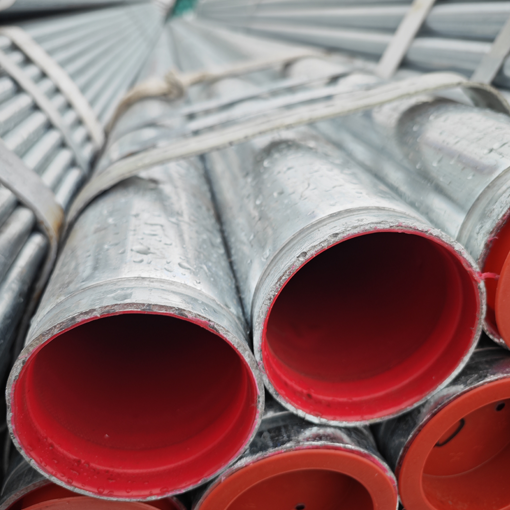
- The covering is chosen based on the service. If you want to bury sewage or low-corrosion lines, bitumen three-cloth two-coat systems work well. For buried oil and gas lines, 3PE and FBE work well. Epoxy white ceramic is good for water that you can drink. GB/T 23257 and SY/T 0315 say how thick these coatings can be on pipes made in China and how well they stick to the pipe.
- Weld inspection with an X-ray machine, hydrostatic testing, and a mill test certificate linked to heat numbers should all be part of quality checks. Without this paperwork, pipes often can't be brought in or are turned down by the owner. This makes it take longer to lay the pipes, and it can result in fines in EPC contracts.
Here are five points that cover most of the questions that buyers ask me before they send out a request for quotes. We'll go over each use case, standard, and buying option in more depth below.
Talk to Youcheng Before You Finalize Specifications
I understand how pricey it is to fix a pipe that is already on the vessel if you pick the wrong type or covering. About 20000 tons of large-diameter stock is always on hand at Youcheng. Before you sign off on a spec sheet, you can email them to make sure the fit is perfect. Email sales@youchengkjsteel.com and ask for our free LSAW carbon steel pipe manufacturer data sheet, mill test certificate sample, and inspection report template.
What Industries Commonly Use Carbon Steel Pipes?
Carbon Steel Pipe Definition and Pipe Types
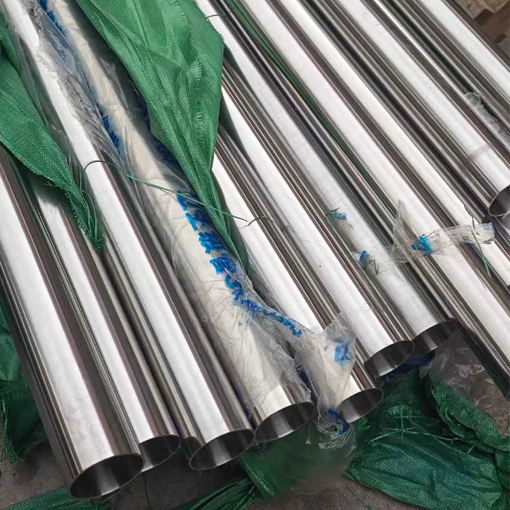
Iron, carbon, and manganese make up most of carbon steel pipe. Chrome isn't as high in it as it is in stainless steel pipe. The materials stay cheap because of this, but they are still strong enough to be welded on most building projects.
People who make pipes do it in four main ways. A solid billet that has been pierced to make a hollow shape can be used to make seamless pipe. There isn't even a weld line. A flat strip is rolled into a circle, and the ends are joined together with electricity. This makes ERW pipe. LSAW carbon steel pipe is made by rolling a steel plate into a cylinder shape and welding it together in a straight line. SSAW pipe is made from a coil that was wound up at an angle and then bonded along a circular seam. Spiral welded pipe is another name for this kind of pipe.
Main Industrial Applications Across Sectors
There are five main places where you can find this kind of carbon steel pipe. They don't pick a pipe type based on price alone. In its place, they look at pressure, diameter, and how long they think the part will last.
- Oil and gas companies use carbon steel pipe for gathering lines, transfer trunk lines, and process pipes in plants. For long, high-pressure parts where ERW pipe can't meet the API 5L rules for wall thickness or width, large-diameter LSAW carbon steel pipe is used.
- Municipal water officials use carbon steel pipe for force mains that bring in wastewater, clean water, and bring in raw water. It is common to use epoxy ceramic-lined or coated LSAW pipe for lines wider than 600 mm. This type of pipe can be buried and still follow the rules for drinking water contact.
- Concrete columns, braces, driven piles, and micropiles under building bases are all made of carbon steel pipe. Pipe piles must follow ASTM A252, and EN 10219 is used for structural hollow sections that need to be cold-formed.
- Carbon steel pipe is used in power plants for networks that move ash, fire water loops, and lines that bring in cold water. Carbon steel types are not safe enough for high-temperature steam lines, so they need alloy steel instead.
- Shipping and fabrication yards use carbon steel pipe to make process skids, frames for OEM equipment, and structures for ships. To fit the project, the pipe often needs to be cut to size, have its ends beveled, and have the right coatings put on it.
We get a lot of business from people in the Middle East, Africa, South America, and Southeast Asia who need help with these five things.
Use Cases by Buyer Type
For each type of buyer, the most important parts of a quote are different. The table below shows the order of them.
| Buyer or user | Need that everyone has | Relevant LSAW value that counts |
|---|---|---|
| OEM or EPC contractor | Fixed specifications and repeatable production runs | Custom grades, sizes, inspection plans, and ways to weld |
| Distributor or stockist | Sizes that can be kept on hand and tracked fully | Standard measurements, mill certificates, packing, and export-ready packaging |
| Plant operator or end user | Reliable service under pressure or outside load | Hydrostatic testing, NDT records, sealing, and project-matched compliance |
How Are Carbon Steel Pipes Used in Oil and Gas Pipelines?
Pipeline and Process Applications
There are different pipe roles that do work with oil and gas. Pipes in the ground connect stations and carry goods, natural gas, or crude oil. Water goes through a plant or port through pipes called process pipes. Platforms and wells are held up by pipes and casing. For transmission and trunk lines, large-diameter LSAW carbon steel pipe is better than ERW pipe with the same outside diameter because it can handle high design pressure and thick walls.
Relevant Oil and Gas Standards
API definition 5L talks about the grade of line pipes, the level of product definition, the sizes, tests, and marking. ISO 3183 sets the same rules in a way that is used around the world. These rules are very similar to each other (ISO, 2019).
| Requirement | Point of reference | Checking point |
|---|---|---|
| Line pipe | ISO 3183 or API 5L | Grade, PSL, widths, tests, and marks |
| General welded pipe | ASTM A53 | Grade, Schedule, Hydrostatic Test, and Sizes |
| Coating | Project coating specification | How to Prepare the Surface, How Thick the Coating Should Be, and A Test Over the Holidays |
API 5L grades range from L245/B to L415/X60 and even higher X grades, depending on what the project needs. The right grade is picked based on the maximum pressure, temperature, fracture toughness, sour service, and the fluid being moved (API, 2021).
Common Risks and How Procurement Teams Reduce Them
There are four risks that keep coming up when getting a pipeline. Each one can be fixed in a useful way that doesn't cost as much as sending something that doesn't work.
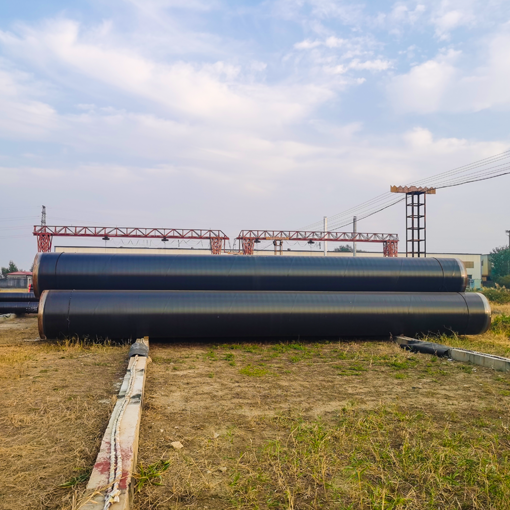
- To stop corrosion from buried or submerged service, you can coat the inside or outside, make the walls thicker, use cathodic protection, or raise the ground. According to GB/T 23257, 3PE and FBE coatings should be used on buried transmission parts to make sure that they are all the same width and stick together well.
- To keep hydrogen sulfide from getting into sour gas fields, you need to pick sour-service materials that meet certain strength standards and do what NACE MR0175/ISO 15156 says (AMPP, 2021). Cracks could start years after the installation, not when it was delivered, if you don't do this step.
- Weld flaws, like not enough fusion, are found by using the right welding techniques and then testing the welds with x-rays or ultrasounds before sending them out. Because of this, every order of LSAW carbon steel pipe should always come with full NDT records that are linked to the heat numbers.
- If you swap grades without written permission, it might be impossible to keep track of and the owner might not accept it. Every time the pipe is changed, it needs to be signed off on in writing and have a mill test certificate that matches.
Why Do Water Utilities Choose Carbon Steel Pipe for Transmission Lines?
Water, Wastewater, and Slurry Service
Steel pipes made of carbon can move raw water, water that has been cleaned, wastewater, and slurry used for abrasive cleaning. Cast iron, HDPE, or concrete-lined pipe can't handle as much pressure at large diameters, and they need more joints along the way. Steel pipe can. For transmission lines longer than 500 mm, LSAW carbon steel pipe is a good choice because it can handle the diameter and wall thickness that strip-based ERW pipe has trouble with.
Internal and External Protection Systems
The choice of lining and coating is based on the type of water and the conditions of the grave. Water that is okay to drink can be used on the epoxy white ceramic covering. It is possible to line some city mains with cement mortar. With sewage lines and dirt that doesn't rust easily, bitumen three-cloth two-coat systems work well. Parts that are underground, underwater, or in water need extra protection against corrosion on the outside. Before the pipe is sent out, this needs to be checked with adhesion tests, holiday tests, and surface-preparation records.
Water-Pipeline Selection Checklist
A water utility or EPC contractor should check with their design engineer about the following things before asking for prices.
- Design pressure as well as the expected spike pressure when the pump starts up or the valve shuts. This is because the steel wall's width needs to be able to accommodate both, not just the steady-state flow conditions.
- Some of the things that affect the choice of coating and lining for long-term use are the nominal diameter, wall thickness, water chemistry, chloride level, pH, and operating temperature.
- How deep the pipe is buried, how resistive the earth is, how much weight is on the outside, what kind of joint is used, and whether the project needs local drinking water contact approval before the pipe hits the supply.
With these things on the list, most of the arguments that happen about lining and coating during owner checks at the job site can be settled.
What Role Do Carbon Steel Pipes Play in Construction and Piling?
Structural and Foundation Uses
Builders use LSAW carbon steel pipe for micropiles, driven piles, structural beams, stairs, and temporary construction projects. It's more important to look at the diameter, wall thickness, and buckling resistance when this is used than the pressure rating. Even if they both come from the same mill run, a pile that holds up a building load along its length needs different design checks than a pipe that holds stress inside it.
Construction Standards and Documentation
Steel pipe piles that are either welded or not welded can be used in ASTM A252 projects. EN 10219 talks about hollow structural parts for building frames that are formed cold and then soldered. EN 1090 tells builders how to put together certain projects that use structural steelwork that has already been made. People who want to buy piles should make sure they are the right size, get confirmation of the steel grade, see records of how well the welds were done, and see proof of the coating. This is because it costs a lot more to fix problems after they have been installed than to check them before they are sent out.
Construction Risks on Site
Four things make up most of the building pipe reports we get from builders.
- If you compare the design loads and unsupported length to the real wall thickness that was shipped, not just the nominal catalog number, the chance of buckling or falling goes down.
- Bad field fit-up can happen when ovality isn't under control, lengths are curved, or bevel angles aren't all the same. All of these issues can be seen in a good report on measurements taken before shipping.
- For buried piles that rust quickly, there needs to be a clear protection system and a way to fix any damage that happens while they are being driven or handled on the job site.
- Later, there are arguments because it's not clear who is in charge of the final welding and checking work in the field. Which step is the supplier's, the fabricator's, or the site crew's job should be made clear in the contract.
How Are Carbon Steel Pipes Used in Power Plant Utility Systems?
Utility and Balance-of-Plant Systems
It is used in power plants for fuel lines, fire water loops, cooling water lines, and devices that move compressed air. For high-temperature steam and boiler pipes, alloy steel grades work better than plain carbon steel grades most of the time. Many plants use LSAW carbon steel pipe for large lines that bring in and send out cooling water because of its width and flow rates.
Temperature, Pressure, and Fatigue Requirements
Not only does the grade of the material have to match the design pressure and temperature, but so does the width of the wall. The welded joints will be stressed over the course of the plant's life by loading and unloading, vibration, and the distance between the supports. If the steel is going to be used in cold weather, it may need to be hit more often to make sure it stays strong.
Power-Plant Quality Records
A full order for power plant pipes should have five different kinds of paperwork. One is a mill test certificate with a heat number that can be tracked. Another is a welding procedure specification with welder qualification records. There are also reports on visual and NDT inspections, hydrostatic or pneumatic test records according to the safety code, and records of coating or flushing if needed for cleanliness.
Why Are LSAW Pipes Suitable for Large-Diameter Pipelines?
How LSAW Pipe Is Made
Steel plates or wide strips are used to make LSAW carbon steel pipe. These are then cut to the right size and edge-milled. The plate is changed into a cylinder by a JCOE or UOE process. The plates get their names from the steps they take during the process. The seam is then joined from the inside to the outside using submerged arc welding to make sure it's strong all the way through. More control over the size is important as the diameter and wall thickness go up, which is why this route is best.
Large-Diameter LSAW Benefits
It is not always possible for strip-based ERW pipe to make a single piece with a large outside diameter and a thick wall. Plate-based forming can. If you pick the right plate grade, you can set goals ahead of time for strength, toughness, and weldability. The shape of the straight weld stays the same along the whole length of the pipe. LSAW carbon steel pipe can also be prepared at the ends, cut to length, coated, and inspected according to plans made just for a transmission project, not a standard catalog size.
LSAW, ERW, Seamless, and SSAW Compared
A lot of people who want to buy pipes ask how these four kinds of pipes work for pipelines.
| Factor | LSAW | ERW | Seamless | SSAW |
|---|---|---|---|---|
| Weld orientation | Longitudinal | Longitudinal | No weld seam | Spiral |
| Strength point | Large diameter, heavy wall | Smaller and medium sizes | Broad pressure service | Large diameter, long runs |
| Cost tendency | Moderate to high, project-based | Most of the time, normal sizes are cheap. | Large sizes are often pricey. | Often competitive when the diameter is big. |
| Key concern | Weld and shape control | High-frequency weld stability | Size and wall-thickness limits | Acceptance of spiral weld angles |
| Common use | Transmission, water, structural | Utility, standard line pipe | High-Pressure, Specialized Service | Water, concrete, and lower-risk lines |
What Are the Main Benefits of LSAW Carbon Steel Pipe Compared to Other Pipe Types?
Performance Advantages
LSAW carbon steel pipe can have thick walls and large diameters. For projects, it can also be made in large amounts. It can be changed to fit API, ISO, ASTM, EN, or project-specific needs without having to be redesigned. It also supports controlled weld inspection and full manufacturing records. Most of the time, coatings, bevels, and custom lengths are common choices that don't need to be asked for separately.
LSAW vs ERW, Seamless, and SSAW in Practice
Before every big bid, procurement teams do these kinds of comparisons, so a direct answer saves them time.
- This is a comparison between LSAW and ERW carbon steel pipe. LSAW is better for larger diameters and thicker walls, while ERW is cheaper for standard medium sizes that are used in distribution networks instead of long transmission runs.
- LSAW vs. seamless carbon steel pipe: seamless pipe doesn't have any weld seams, but it comes in smaller sizes and costs more once the diameter gets too big for most mills to handle for solid billet piercing.
- LSAW vs. SSAW steel pipe: LSAW has a straight seam, while SSAW has a spiral seam. For a given pressure class, project design codes often say which seam type is acceptable.
Cost and Pressure-Rating Considerations
Diameter and thickness alone can never tell you how much pressure something can hold. The grade, wall thickness, weld factor, design code, temperature, rust limit, and safety factor are all things that affect the answer. When you compare costs, you shouldn't just look at the price per ton of pipe. You should also look at things like material, coating, inspection, freight, field welding, and expected maintenance. The price of LSAW carbon steel pipe changes based on grade, size, wall thickness, order number, coating type, check level, and shipping location. This is why it is important to always check quotes line by line.
How Does LSAW Pipe Manufacturing Affect Performance and Quality?
Manufacturing Process Step by Step
The production sequence runs in a fixed order to keep quality repeatable across a large order.
- Plate inspection checks the chemical and thickness, and then cutting and edge milling make the weld sides clean before any making steps start on the production line.
- The plate is shaped into a cylinder using UOE or JCOE. The seam is then closed from the inside and the outside with tack welding and submerged arc welding.
- Expanding, sizing, and straightening to make sure the length and roundness are right; then hydraulic testing, ultrasonic and radiography checking; and finally marking, coating, and packing for shipping.
Manufacturing Controls and Test Methods
There is a paper trail for each step of production that the buyer can check before paying the final amount.
| Control | Common proof |
|---|---|
| Chemical composition | Certificate of heat test and mill test |
| Mechanical properties | Strength, tensile, yield, extension, and impact tests |
| Weld integrity | Reports on UT, RT, or MT inspections |
| Pressure resistance | Record of hydrostatic tests |
| Dimensions | Tell us about the width, wall thickness, ovality, and straightness |
| Traceability | Heat number, pipe number, markings, packing list |
Common Manufacturing Risks and Mitigation
Most pipe rejections at the location are caused by a few mistakes that can be fixed at the plant.
- Professional welding skills and the right NDT method for the job can find welds that don't fuse enough or have slag stuck in them.
- When something forms or expands too quickly, it gets too oval. This can be fixed by making process control stricter and inspecting all dimensions before packing.
- To find differences in wall thickness, look at the plates that are coming in and use ultrasound to check the thickness in several spots along the length of each pipe.
- Repairs to welds that are done without written permission break the chain of inspections. This is why every fix has to have a written process and the buyer's OK before it can be sent out.
How Should Buyers Choose LSAW Carbon Steel Pipe for Projects?
Technical Selection Checklist
Making a clear list for LSAW carbon steel pipe before requesting can save weeks of back and forth later on in the tender process. This is to make sure that everyone is on the same page.
- Know what the project is for, what it's carrying, how wide it should be, how thick the walls should be, what kind of material it is, and what the delivery conditions are.
- Make sure you know the design code's requirements for pressure, temperature, flow rate, and corrosion. You should also know the relevant standard, version, and product specification level.
- Make sure you know the tests that need to be done, the paperwork that you'll need to clear customs at the target port, the length limit, the coating or lining type, the bevel angle, and the end preparation.
Supplier Capability and Evaluation
You should never look at a supplier's price first. The first thing you should do is make sure that the size of your order fits within the range of widths, wall thicknesses, and manufacturing capabilities. Before you go to a site, look at the welding requirements and inspection tools. You should also ask to see examples of mill test certificates, NDT reports, and hydraulic records that are not connected to anyone. Make sure you can follow the raw plate all the way to the finished pipe. Next, look at the export packing, the shipping control, and how the seller deals claims that the goods do not meet requirements.
Youcheng makes and sells LSAW carbon steel pipe in more than ten places, like Kenya, Russia, Kuwait, and Brazil. The pipe is used in water, building, oil and gas, and business projects. The wall can be between 6mm and 40mm thick, and the outside width can be 406mm to 1422mm. There are different grades, from API 5L Gr.B to X70 and Q345B, and they are all based on API 5L, GB/T 9711, and ISO 3183. You can choose from asphalt three-cloth two-coat systems, epoxy white ceramic, 3PE, and FBE as coatings. Buyers should still check these claims with up-to-date certificates and paperwork that is specific to the project, since any factory profile needs to be matched live with the order.
Case Study: A Kuwait EPC Buyer's Nine-Day Delivery
It took 42 days for a bigger company to give a medium-sized EPC contractor in Kuwait City a mill-direct price for coating 450 mm X60 grade LSAW pipe with 3PE. That's when they got in touch with Youcheng. Because the owner's contract said so, the contractor had to start laying pipes by a certain date or face a fine. We had enough in stock to cover the needed amount, and the order was sent out nine days after we got the mill test certificate and records of the hydrostatic, ultrasonic, and X-ray checks. The buyer got lucky because there was what was said to be a 14-day slip in the activation window for the pipe-laying crew.
When people come to buy from us, I tell them right away that a certificate without a matching heat number is just paper and not proof. There is a heat number on each coil and plate that is used in a run. Because that one detail makes the difference between a pipe passing the target check the first time or being held at port.
Procurement, Logistics, and Compliance Factors
When the pipe makes it past the design review stage, business terms are just as important as technical fit. An RFQ should say how many items must be ordered at least once, how long it takes to make standard sizes versus custom sizes, and how long the quote is good for in case the price of raw materials changes. Write down the payment terms, the scope of the guaranty, and how to make a claim before you pay the deposit. That is, not after a fight has started. The Incoterms, the loading port, the inland transfer, and the export packing should all match how big bundles can be handled at the final port.
When it comes to standards, API, ISO, ASTM, and EN don't always work with each other. The design code for the project chooses which one to use. In general, CE marking doesn't apply to just plain pipe; it depends on what kind of equipment or building product it will be used for. When a project has to go through more than one set of laws or inspections, a written compliance grid can be useful.
Conclusion
Carbon steel pipe is used all over the world in water, power, oil and gas, and building projects. It moves loads, gasses, and fluids. LSAW carbon steel pipe is the best choice when a project needs a large diameter, thick walls, controlled weld quality, and all the inspection paperwork that goes with it. The best choice isn't based on just one thing; all of these must be thought about: technical fit, applicable standard, lifecycle cost, corrosion protection, supplier capability, lead time, and traceability. Make sure you look over the design conditions, inspection requirements, and sample quality records from the real provider before you sign off on the final standard.
FAQ
To put it simply, what is LSAW carbon steel pipe?
There is something called LSAW carbon steel pipe that you can make from a carbon steel plate that is welded in a straight line. It's good for large-diameter pipelines, moving water, building piling, and energy infrastructure that needs thick walls.
What do you do with LSAW carbon steel pipe?
You can use it to move water and sewage, oil and gas, structural piling, slurry, and industrial process lines. It is also used for cooling systems in power plants. It's great for tough building jobs because it can handle big diameters and thick walls.
What's the difference between LSAW and ERW pipe made of carbon steel?
A longitudinal submerged arc weld is used to put plates together to make LSAW pipes. Electric resistance welding is used to join strips of metal together to make ERW pipes. With LSAW, bigger diameters and thicker walls work better. On the other hand, normal middle sizes of ERW often cost less.
Can LSAW pipe be used for gas and oil lines?
Yes, as long as it was made per the right rules, such as ISO 3183 or API 5L. You need to make sure of the grade, product standard level, toughness, sour-service rating, weld inspection, finish, and design code before you place an order.
What standards apply to LSAW carbon steel pipe?
A lot of people use the same standards, like ISO 3183, ASTM A53, ASTM A252, EN 10217, and GB/T 9711. The right standard is picked based on whether the pipe is for structural service, filling, pressure service, or line service.
How can you tell if an LSAW pipe is good?
Testing for chemicals, tensile and impact, measurement, weld NDT, hydraulic testing, coating checks, and heat-number tracking are all ways to make sure the product is good. The proof should be in the mill papers and the completion report.
How does the price of LSAW carbon steel pipe change?
The price is based on the size, grade, number of items ordered, standard, finish, level of inspection, end preparation, and location of delivery. The delivered amount can also change because of freight, export packaging, third-party inspection, and the Incoterm that was agreed upon.
Ready to Lock In Your LSAW Pipe Delivery Window?
If you ship a pipe late, it often costs more than the pipe itself because of penalties and crews that aren't working. For popular big diameter sizes, Youcheng ships in 7 to 10 days from a 20000-ton stock. Hydrostatic, acoustic, and X-ray tests are done on every run. Send your spec sheet to sales@youchengkjsteel.com the next time you need to get bids from different LSAW carbon steel pipe suppliers. Our team will check the grade, finish, and lead time in one working day.
References
1. American Petroleum Institute. API Specification 5L: Line Pipe, 2021. https://www.api.org/products-and-services/standards/important-standards-announcements/standard-5l (cited in oil and gas standards and risk sections)
2. European Committee for Standardization. EN 10217: Welded Steel Tubes for Pressure Purposes. https://www.cen.eu/ (cited in construction and standards comparison sections)
3. AMPP (NACE International). NACE MR0175/ISO 15156 Guidance for Materials in H2S-Containing Environments, 2021. https://www.ampp.org/ (cited in oil and gas risk mitigation section)
About the Author
Stella Yang is in charge of sales outside of China at Tianjin Youcheng Technology. She has helped people in the Middle East, Africa, and South America buy steel pipes since the business opened in 2014. She helps the EPC procurement teams with technical questions, looks over mill test certificates, and sets up third-party inspections for API 5L and GB/T 9711 orders as part of her job.
you may like

.webp)